Thomas Lewiner
Partner & Vice President, Boston Consulting Group
Scientific Director, BCG X AI Science Institute
email · Google Scholar · LinkedIn
Abstract
Two doctorates, Professor, fifteen years a researcher in mathematics, then a decade putting AI to work in industry. Now I'm the Scientific Director for the BCG X AI Science Institute, turning science into industrial breakthroughs. On rainy afternoons, a few small apps made with my kids.
Keywords: computational geometry · topology · AI for science & industry
1 Background
I'm a double-PhD executive with about twenty-five years split between advanced R&D and getting work into the world. I'm the Scientific Director for the BCG X AI Science Institute, BCG's global hub for applied AI research — turning science into industrial breakthroughs, around a narrow and demanding question: which scientific problems does AI genuinely accelerate, and what does it take to industrialise the answer.
Before that I spent seven years inside an industrial R&D organisation at Ceva Santé Animale — first as Chief Data Officer, then as Chief Data Science & Bioinformatics Officer — pivoting the group toward TechBio and running AI-driven vaccine design from research through regulatory validation. That is where I learned which parts of the promise survive contact with a laboratory.
Earlier I helped scale BCG Gamma (now BCG X) from its earliest days, and for fifteen years I was a researcher and professor of mathematics at PUC-Rio, working across computational geometry and topology, discrete Morse theory, geometry processing, reservoir modeling and computational fluid dynamics. I was elected an affiliated member of the Brazilian Academy of Sciences.
Alongside Ceva, I spent five years as Operating Partner at Quadrille Capital (2021–2026), looking at AI and deeptech companies from the technical side, and I served on the advisory board of Vegetal Signals (2020–2026), a Bordeaux deeptech reading plant electrophysiology to tell growers what their crops need. I stepped back from both in September 2026 to take up the BCG role.
Table 1: Positions, degrees and honors. 80+ publications, 3300+ citations, h-index 28+, 20+ graduate students supervised. The longer version is on LinkedIn.
| Industry | |
|---|---|
| 2026–now | Partner & Vice President · Scientific Director, BCG X AI Science Institute, Boston Consulting Group · BCG X |
| 2022–2026 | Chief Data Science & Bioinformatics Officer, Ceva Santé Animale |
| 2019–2022 | Chief Data Officer, Ceva Santé Animale |
| 2016–2019 | Lead Data Scientist, Boston Consulting Group · BCG Gamma |
| Boards & advisory | |
| 2021–2026 | Operating Partner, Quadrille Capital · technology & healthcare growth equity |
| 2020–2026 | Advisory board · machine learning, Vegetal Signals · plant electrophysiology for agriculture |
2 Research
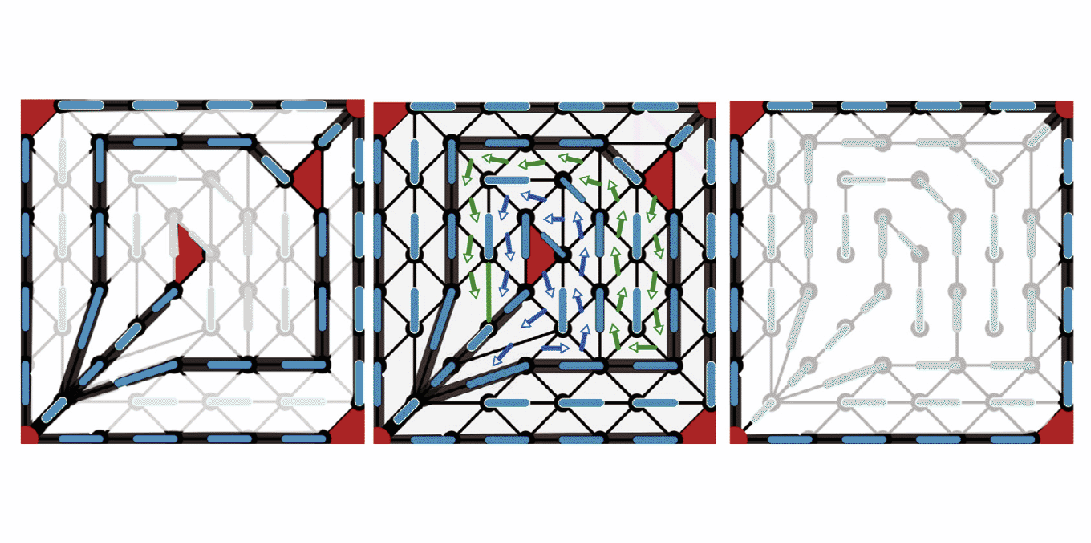
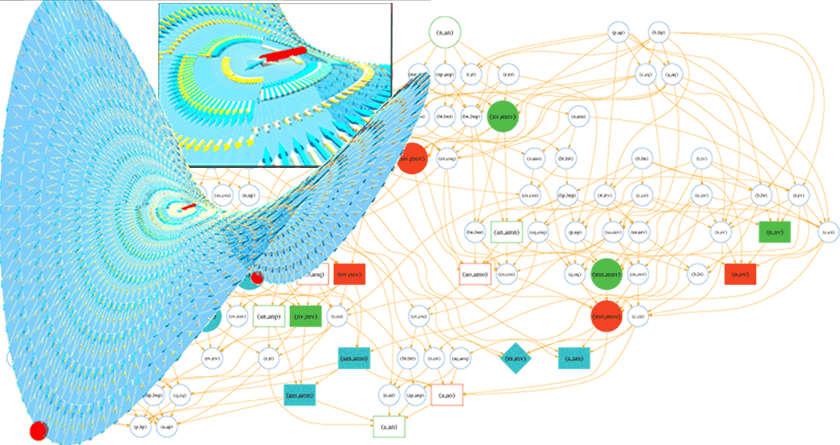
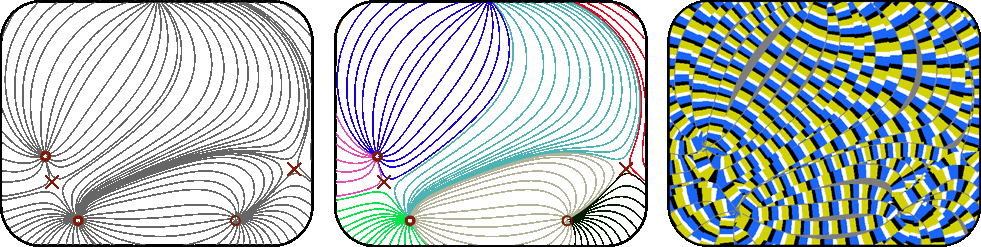
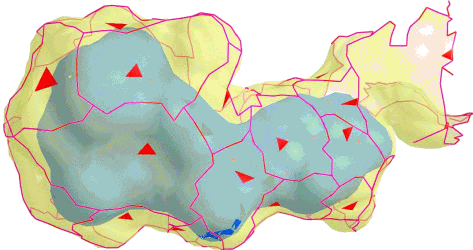
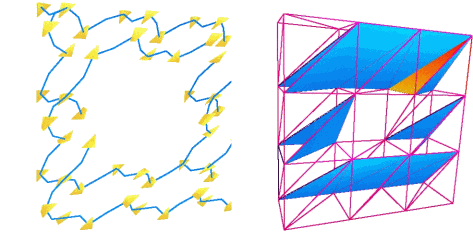
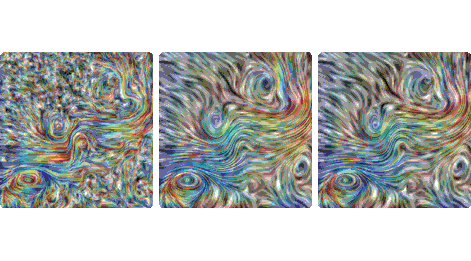
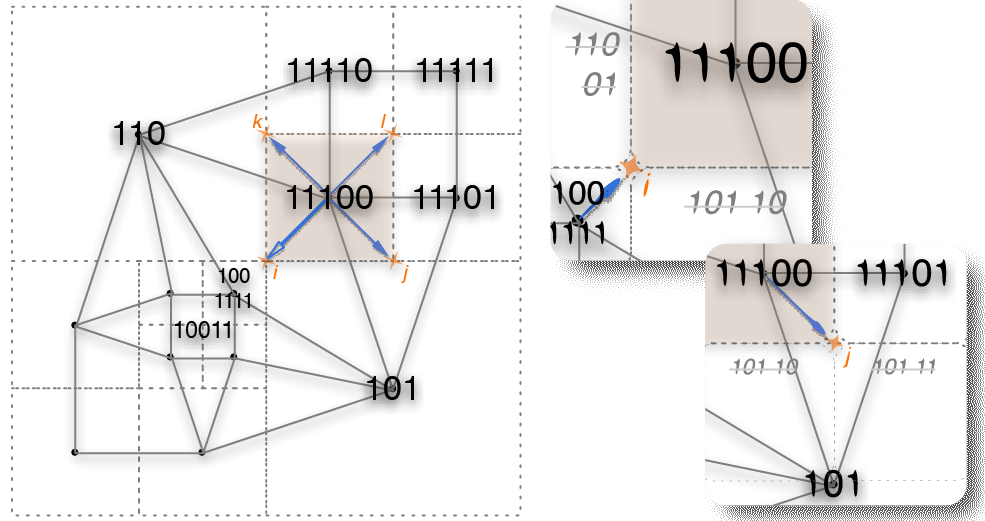
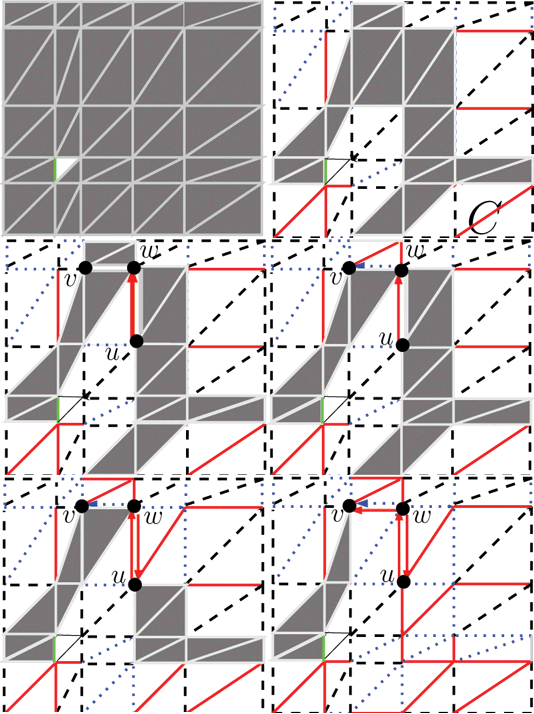
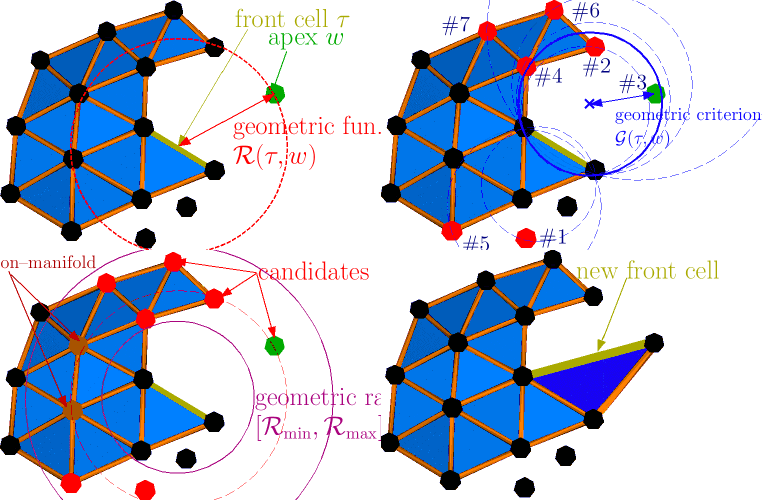
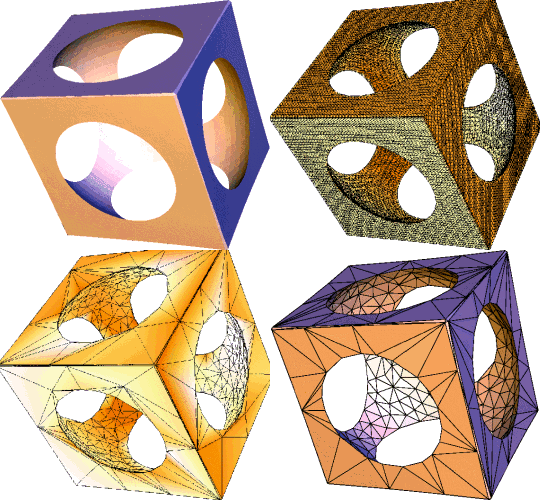
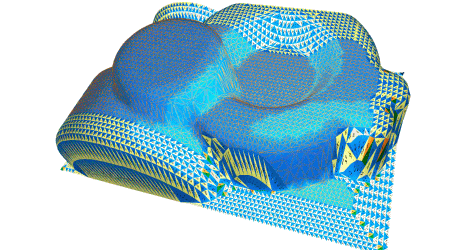
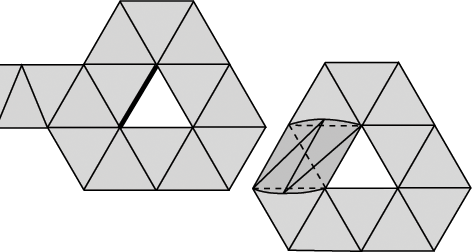
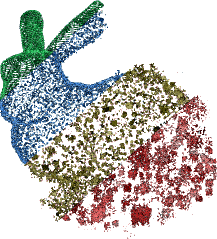
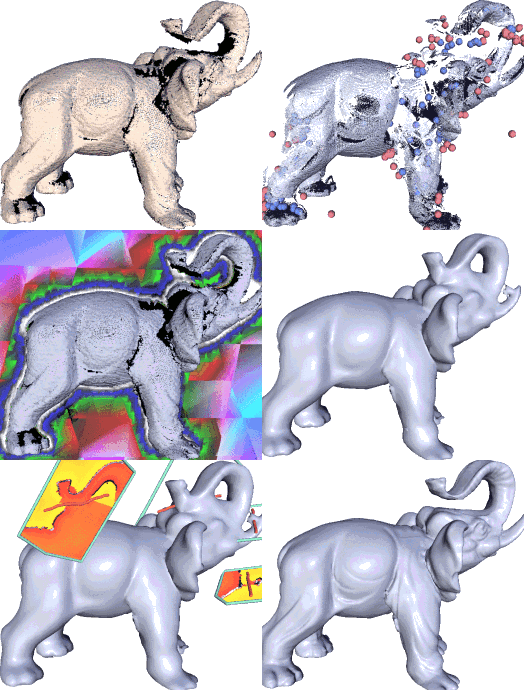
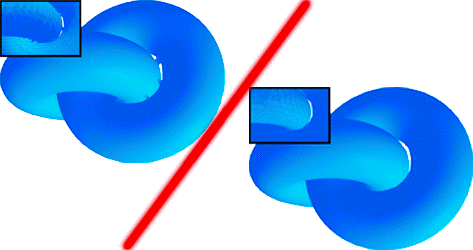
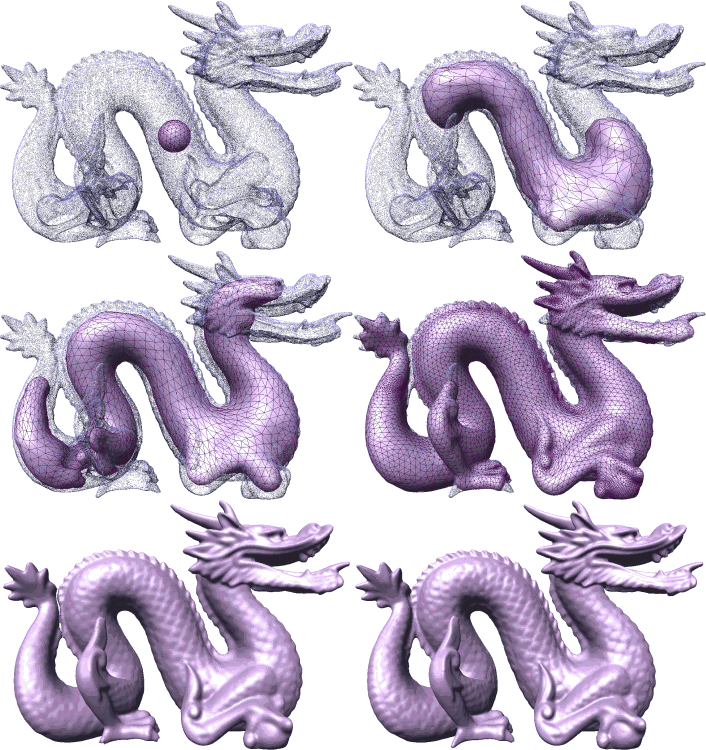
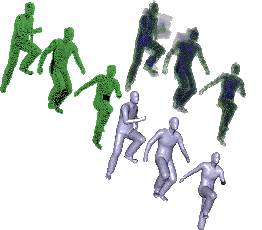
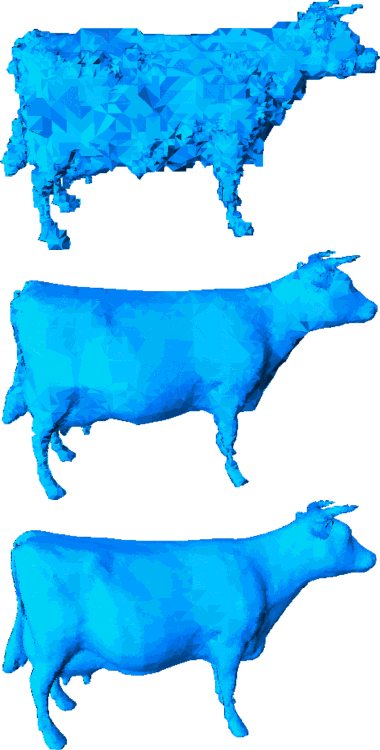
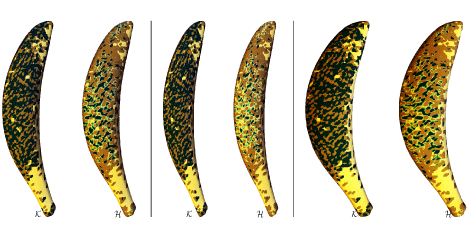
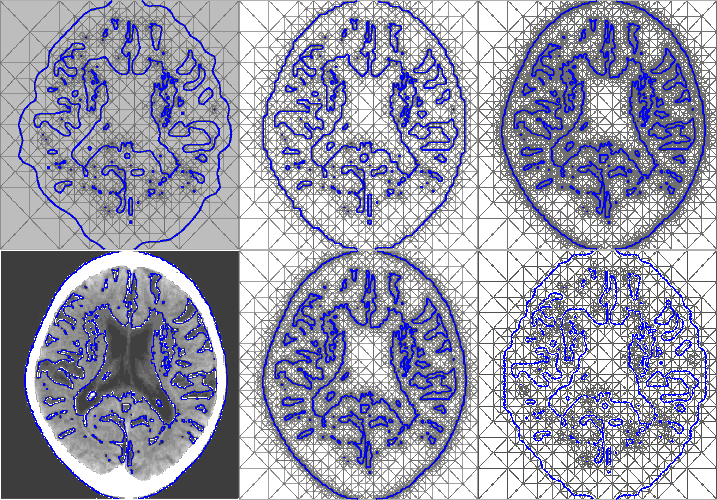
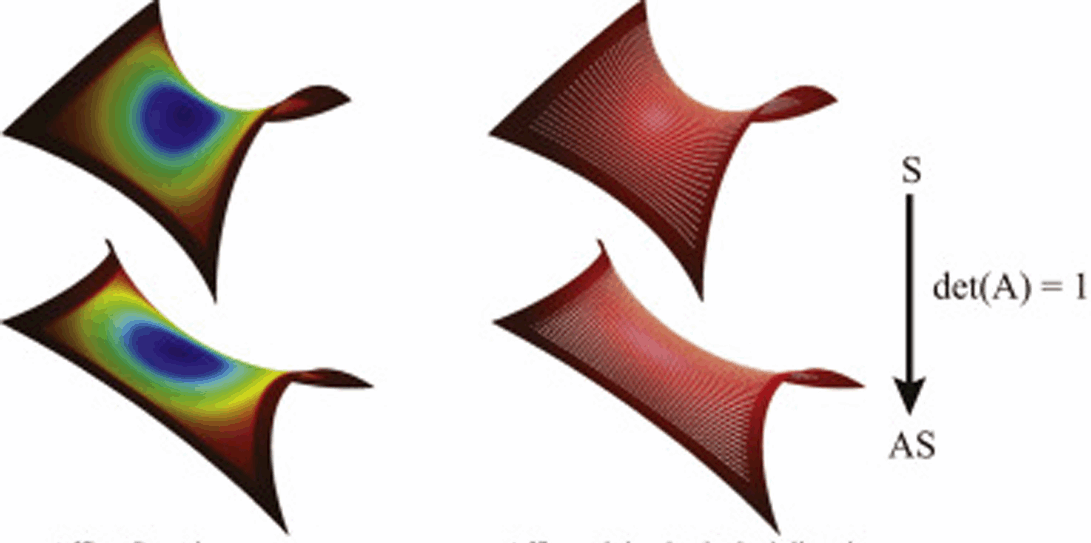
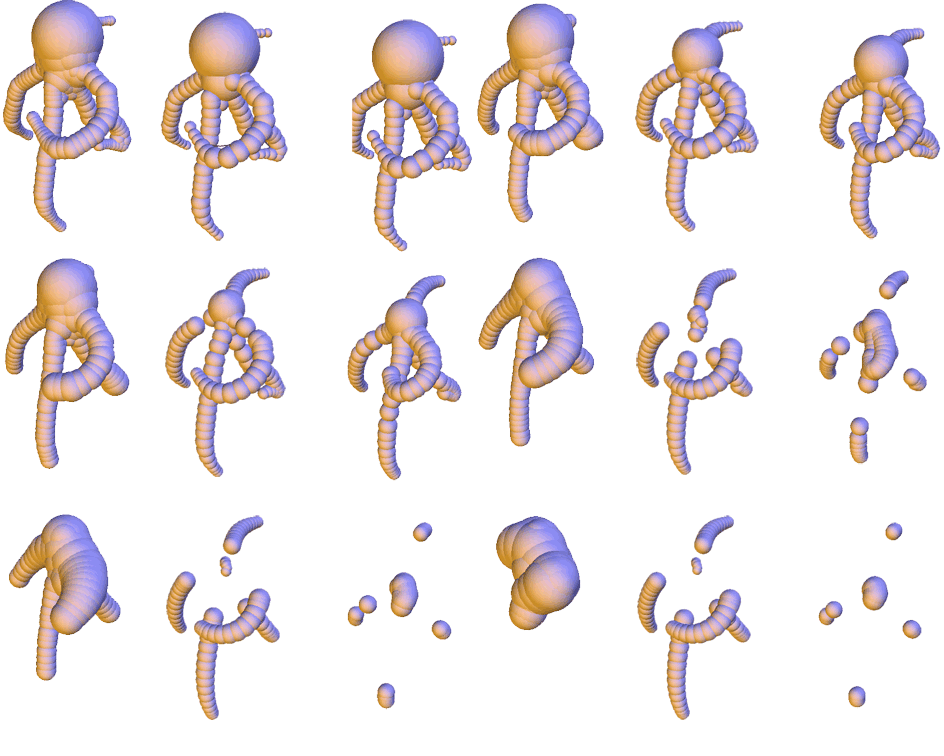
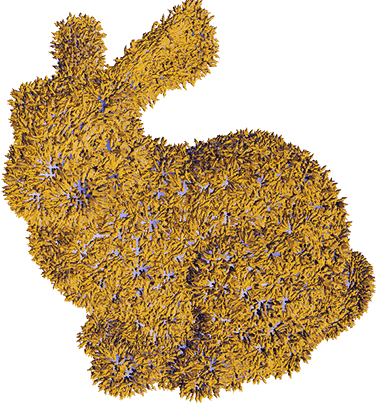
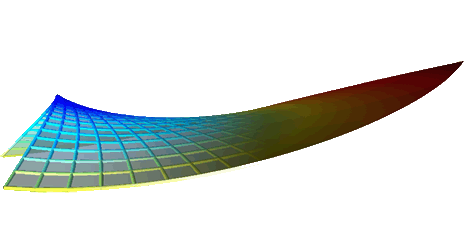
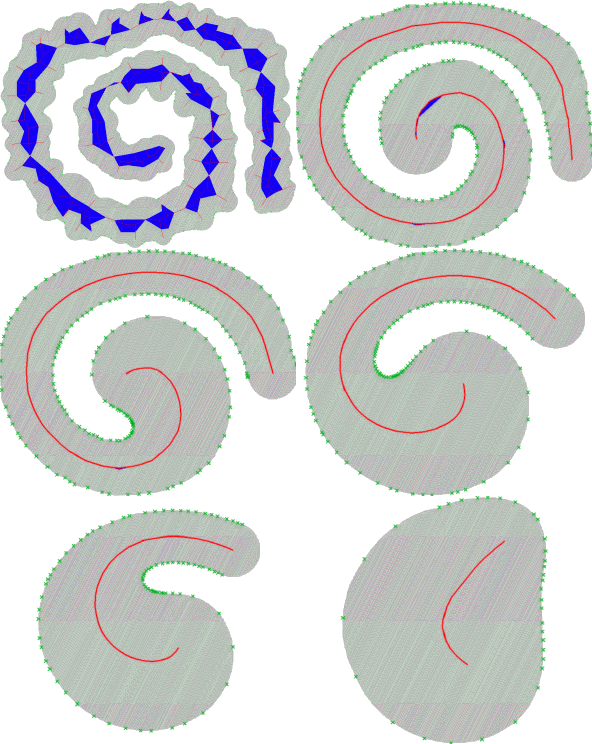
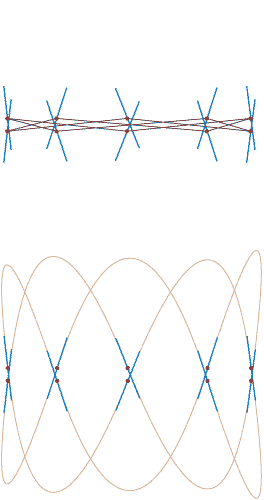
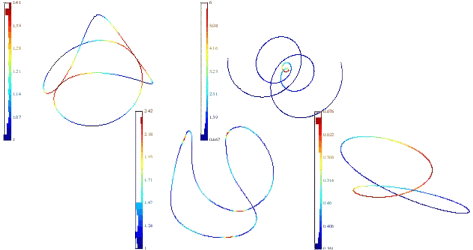
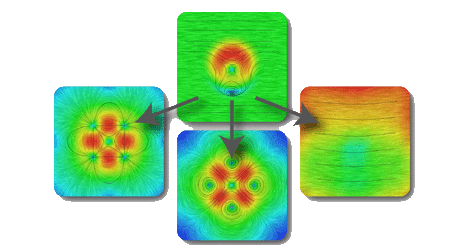
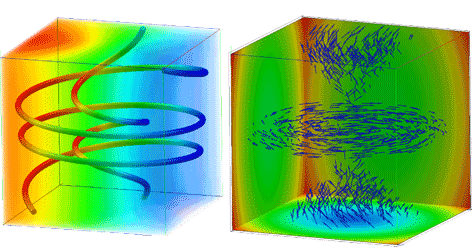
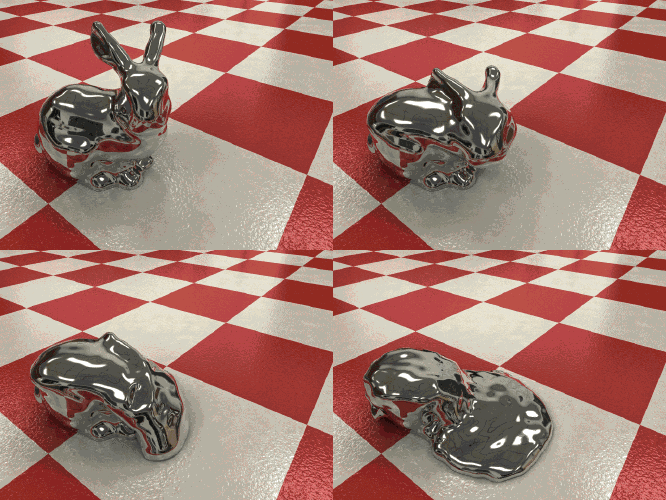
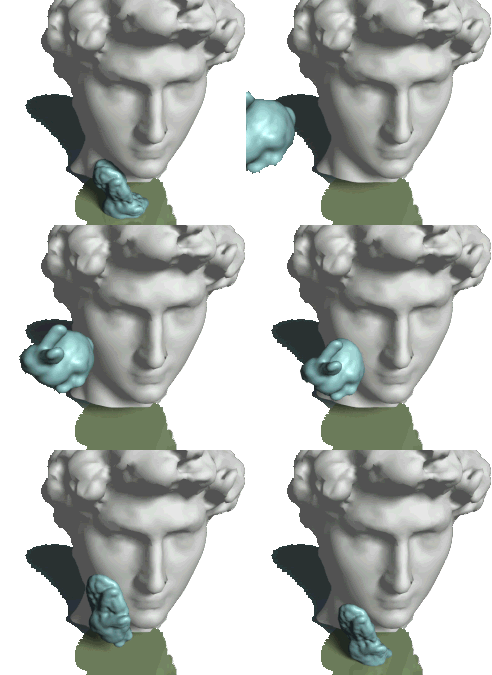
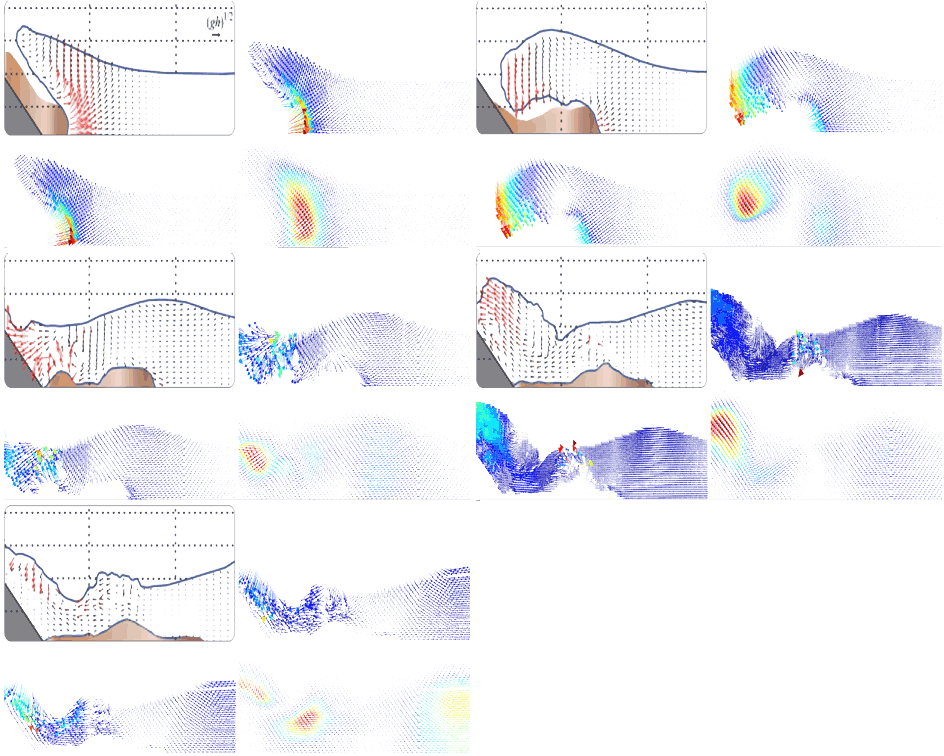
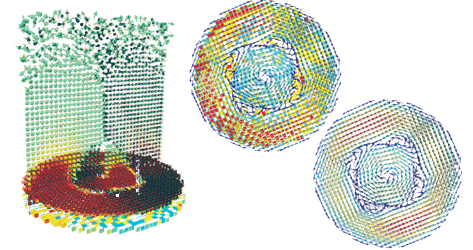
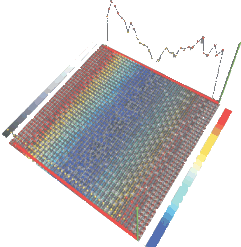
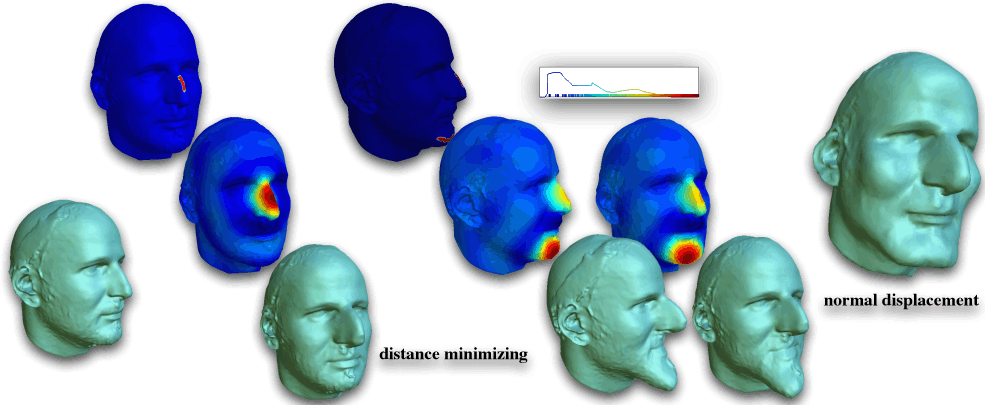
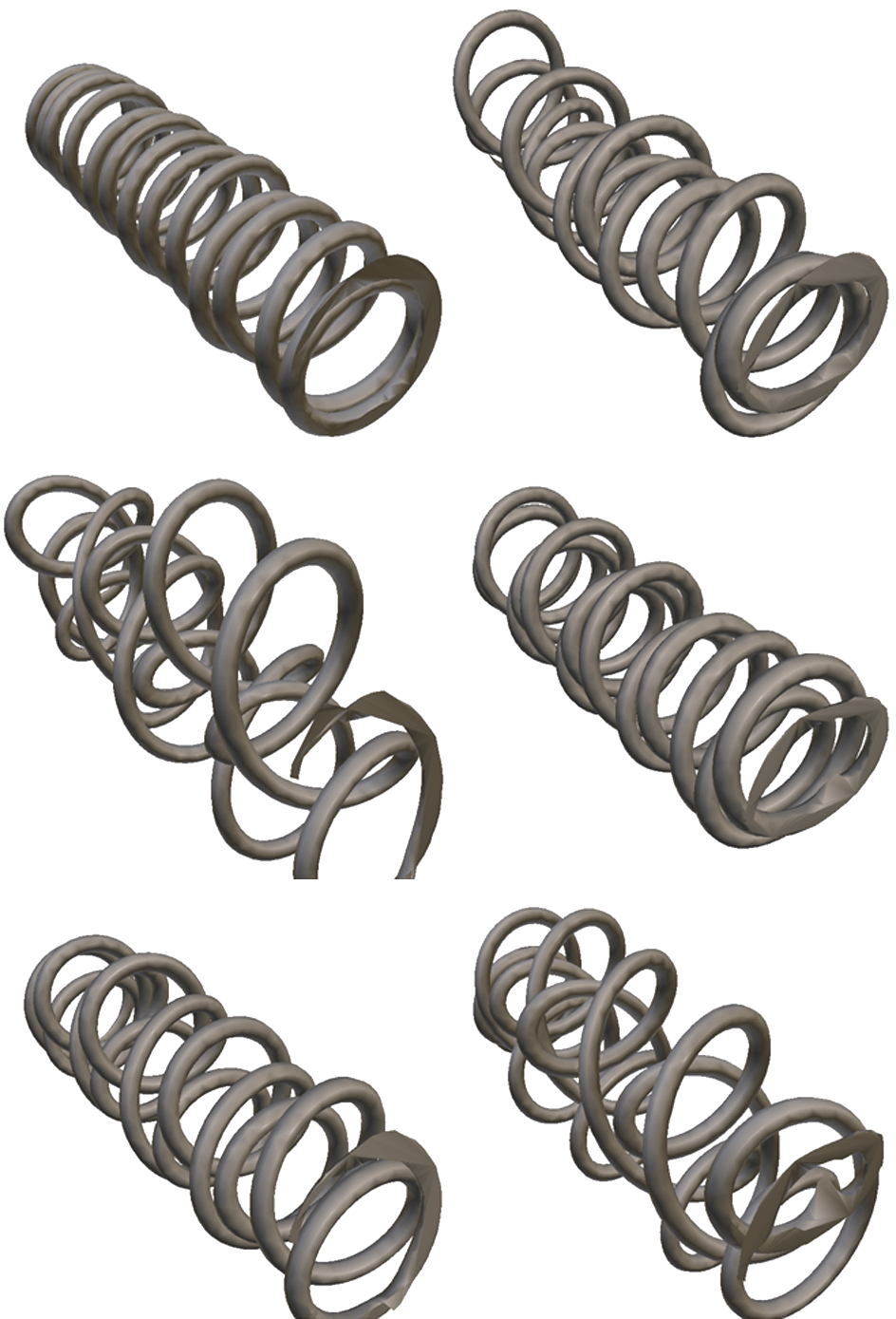
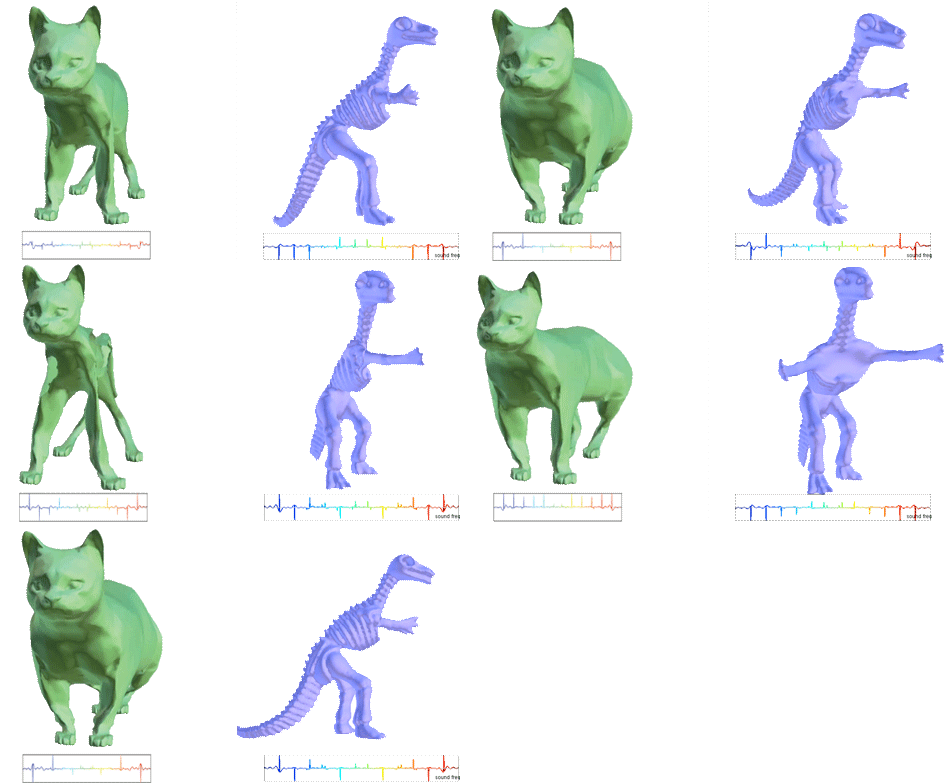
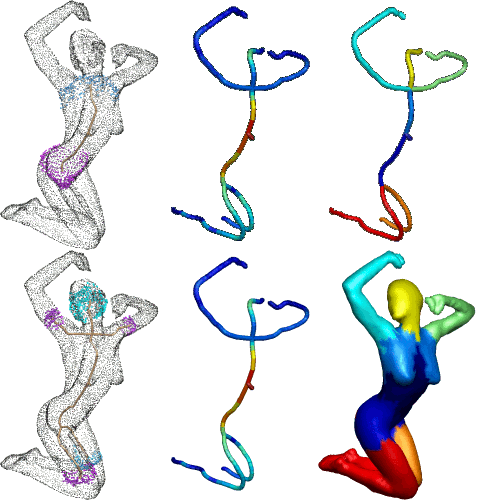
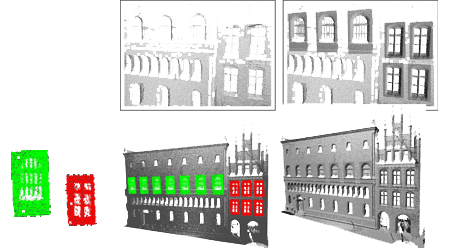
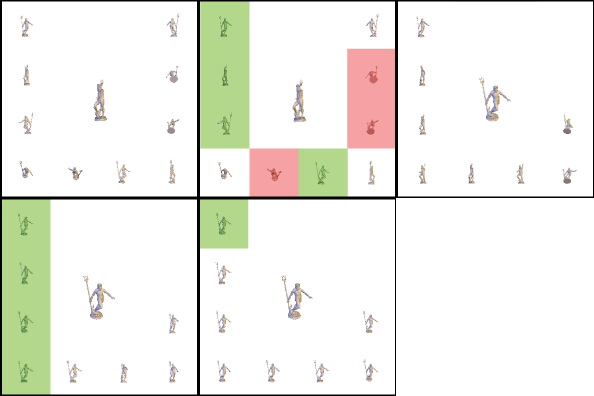
Fifteen years of academic research: 73 papers from 2002 to 2021, gathered by topic in Figures 2–7 and listed in full in the references. Each panel and each title opens its paper; the complete record is on Google Scholar.
3 Projects
3.1 The ·sophe apps
A little suite of apps about time & measure, made with my kids. They started as homework helpers and kept growing. Each ships on macOS, iOS and watchOS (Figure 1).
| Academia | |
|---|---|
| 2006–2016 | Associate Professor & Researcher, PUC-Rio · Mathematics |
| 2018–2024 | Lecturer · DSBA Master, CentraleSupélec / ESSEC |
| 2007–2015 | Visiting Professor, École Polytechnique · U. of Queensland · Tel-Aviv U. · FU-Berlin |
| Degrees | |
| 2003–2005 | Ph.D. in Mathematics, PUC-Rio, Geometric Discrete Morse Complexes |
| 2002–2005 | Ph.D. in Computer Science, INRIA / Université Paris VI, Mesh Compression from Geometry |
| 2000–2002 | M.Sc. · Mathematics, Telecom ParisTech & PUC-Rio |
| 1997–2000 | M.Eng., Science & Technology, École Polytechnique · Ingénieur Polytechnicien Program, computer science & physics |
| Honors | |
| 2012–2016 | Affiliated member, Brazilian Academy of Sciences |
| 2011 | Keynote speaker, TopoInVis 2011, ETH Zürich |
| 2011–2013 | Program chair, ACM SoCG 2013 · Sibgrapi 2011 |
| – | Editor, Computer Graphics Forum · Image Processing On Line · Anais da ABC |
3.2 Old code
- Marching Cubes 33 (2003). Reference C++ library ensuring exact topological consistency for isosurfaces without cracked geometry structures. [source.zip · paper]
- Topological Mesh Operators (2010). Discrete assembly of combinatorial operators for mutating triangulated 2-manifold structures. [source.zip · paper]
- Pointerless Octree Duals (2010). Memory-efficient algorithm optimizing rapid generation bounds on deep dynamic trees. [source.zip · paper]
- Arc-Length Based Curvature Estimation (2006). Demonstration program (Windows) for the paper, with examples. [demo.zip · paper]
3.3 Tutorials
- Topology of discrete manifolds (and non-manifolds) through cell complexes, mini-course at the IMPA trimester on Computational Manifolds and Applications.
- Geometric invariant calculus and estimation: an introduction to Euclidean and affine geometries, with M. Andrade. 28th Brazilian Mathematics Colloquium, IMPA (08/2011).
- Implicit curves and surfaces: elements of differential and discrete geometries, with M. Andrade, A. Cabral, V. Mello and A. Peixoto. 1st Mathematics Colloquium of the North East (03/2011).
- Meshless fluid simulation: an introduction to SPH methods, with A. Paiva, F. Petronetto and G. Tavares. 27th Brazilian Mathematics Colloquium, IMPA (08/2009).
- Introduction to Computer Graphics, with V. Mello. Summer School, Federal University of Alagoas (01–02/2009).
- Implicit Surfaces and Isosurfaces: from Calculus to Medical, Game and Oil Industries, with A. Peixoto. IV National Symposium / Scientific Initiation Days, IMPA (11/2008).
- 3D Compression: from A to Zip, Tutorial at Sibgrapi 2007 (10/2007).
- 3D Objects Compression, One-week course at Matfest 2006, Federal University of Alagoas (06/2006).
4 Students
Doctoral
- Tiago N. de Brito, discrete differential geometry (PUC-Rio · 2014).
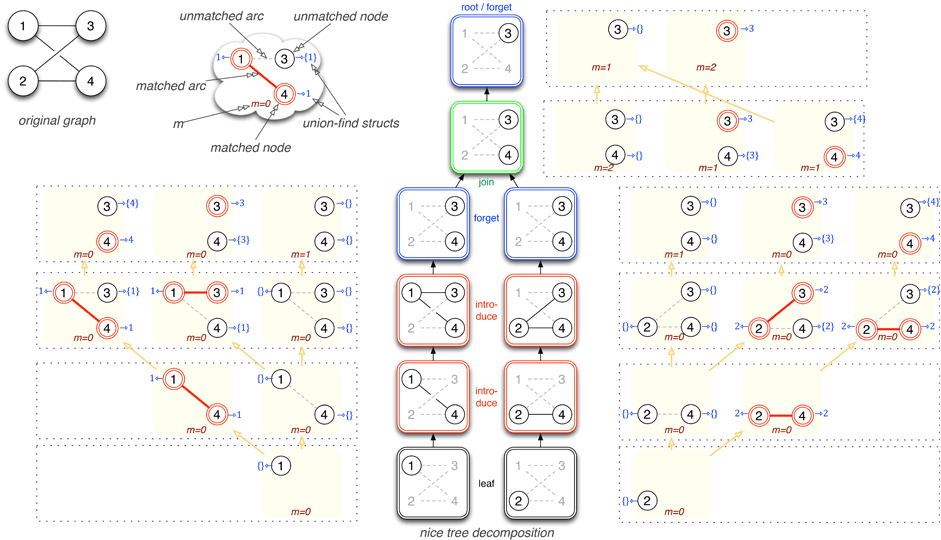
- João A. R. da Paixão, discrete Morse matchings: complexity & stable matching (PUC-Rio · 2014).
- Jyrko C. Morris, foliating Marching Cubes' cases in 3D & 4D (IMPA · 2013).
- Maria A. Costa, affine structures & isosurfaces (PUC-Rio · 2011).
- Renata T. L. do Nascimento, quad meshes (PUC-Rio · 2011).
- Roger Véron, affine estimators & applications (PUC-Rio · 2011).
- Thales M. A. Vieira, smart galleries & camera placement (PUC-Rio · 2010).
- Allyson N. T. Cabral, tetraquads (PUC-Rio · 2010).
- Rener P. de Castro, statistical optimization of hierarchical searches (PUC-Rio · 2008).
- Clarissa C. S. C. Marques, real-time 3D animation, harmonic & modal (PUC-Rio · 2007).
Master's
- Thiago E. Gomes, modeling & visualization of TriQuad (UFRJ · 2014).
- Guilherme N. Seguro, model reduction for flow simulation (UFRJ · 2014).
- Romulo Brito, invariant derivative filters (PUC-Rio · 2013).
- Rafael L. A. Martinez, Kalman filters (PUC-Rio · 2013).
- Karine R. Pereira, computational geometry for petroleum engineering (PUC-Rio · 2013).
- Renata T. L. do Nascimento, topology-based self-animated vector fields (PUC-Rio · 2011).
- Lis I. R. L. Custódio, barycentric coordinates for mesh deformation (PUC-Rio · 2010).
- João A. R. da Paixão, feature-preserving vector field denoising (PUC-Rio · 2010).
- Betina Vath, union of balls, medial axis & 3D deformation (PUC-Rio · 2007).
- David Rey, distributions & immersions (PUC-Rio · 2007).
- Catiuscia A. Borges, connectivity-based geometry reconstruction (PUC-Rio · 2007).
Undergraduate research & final projects
Eric Cardona Romani '07 · Daniel Fleischman '07 · Matheus F. F. Maciel '07 · Carlos Simonsen Leal '07 · Bernardo Ribeiro '07 · Raffael Capano de Arruda '08 · Mariana Milazzo '08 · Lucas von Haeling Braune '09 · Victor Hugo M. Ferreira '09 · Cairo P. C. Caplan '09 · Rafael L. A. Martinez '06 · Erick C. S. Talarico '06 · Bianca de C. Lodoli '12–13 · Rafael Farias Cação '12–13 · Victor Hugo de O. da Silva '13 · Yukio Shiota Junior '13 · José Eliton Albuquerque Filho '12 · Leandro dos Reis Lopes '12 · Arthur de Paula Kolblinger '14 · Alexandre Maxinsang '14 · Maximiliano Faria '14 · Romain Faugeroux '14 · Anna-Lívia de Souza Ribeiro '14.
References
- [1]B. A. Burton, T. Lewiner, J. Paixão, J. Spreer. Parameterized Complexity of Discrete Morse Theory. ACM TOMS 42(1), 2016.
- [2]T. Novello, J. Paixão, C. Tomei, T. Lewiner. Discrete line fields on surfaces. Topol. Appl. 290(1), 2021.
- [3]T. Lewiner. Critical sets in discrete Morse theories: relating Forman and piecewise-linear approaches. CAGD 30(6), 2013.
- [4]R. Nascimento, T. Lewiner. Streamline-based topological graph construction with application to self-animated images. Sibgrapi 2013.
- [5]F. Cazals, F. Chazal, T. Lewiner. Molecular shape analysis based upon Morse-Smale complex and the connolly function. SoCG 2003.
- [6]T. Lewiner, H. Lopes, G. Tavares. Applications of Forman’s discrete Morse theory to topology visualization and mesh compression. IEEE TVCG 10(5), 2004.
- [7]R. Nascimento, J. Paixão, H. Lopes, T. Lewiner. Topology aware vector field denoising. Sibgrapi 2010.
- [8]T. Lewiner, H. Lopes, G. Tavares. Optimal discrete Morse functions for 2-manifolds. Comput. Geom. 26(3), 2003.
- [9]B. A. Burton, T. Lewiner, J. Paixão, J. Spreer. Parameterized Complexity of Discrete Morse Theory. SoCG 2013.
- [10]T. Lewiner, H. Lopes, G. Tavares. Towards optimality in discrete Morse theory. Exp. Math. 12(3), 2003.
- [11]T. Lewiner. Geometric discrete Morse complexes. PhD thesis, PUC-Rio, 2005.
- [12]T. Lewiner. Constructing discrete Morse functions. MSc thesis, PUC-Rio, 2002.
- [13]T. Lewiner, H. Lopes, G. Tavares. Visualizing Forman’s discrete vector field. Vis. Math. III, Springer, 2002.
- [14]G. Tavares, R. Santos, H. Lopes, T. Lewiner, A. W. Vieira. Topological reconstruction of oil reservoirs from seismic surfaces. IAMG 2003.
- [15]T. Lewiner, V. Mello, A. Peixoto, S. Pesco, H. Lopes. Fast generation of pointerless octree duals. SGP 2010.
- [16]L. Castelli Aleardi, E. Fusy, T. Lewiner. Schnyder woods for higher genus triangulated surfaces, with applications to encoding. Discrete Comput. Geom. 42(3), 2009.
- [17]T. Lewiner, M. Craizer, H. Lopes, S. Pesco, L. Velho, E. Medeiros. GEncode: geometry-driven compression for general meshes. Comput. Graph. Forum 25(4), 2006.
- [18]A. W. Vieira, T. Lewiner, L. Velho, H. Lopes, G. Tavares. Stellar mesh simplification using probabilistic optimization. Comput. Graph. Forum 23(4), 2004.
- [19]T. Lewiner, H. Lopes, J. Rossignac, A. W. Vieira. Efficient EdgeBreaker for surfaces of arbitrary topology. Sibgrapi 2004.
- [20]T. Lewiner, H. Lopes, E. Medeiros, G. Tavares, L. Velho. Topological mesh operators. CAGD 27(1), 2010.
- [21]A. Bordignon, T. Lewiner, H. Lopes, G. Tavares, R. Castro. Point set compression through BSP quantization. Sibgrapi 2006.
- [22]A. W. Vieira, L. Velho, H. Lopes, G. Tavares, T. Lewiner. Fast stellar mesh simplification. Sibgrapi 2003.
- [23]R. Castro, T. Lewiner, H. Lopes, G. Tavares, A. Bordignon. Statistical optimization of octree searches. Comput. Graph. Forum 27(6), 2008.
- [24]M. Lage, A. Bordignon, F. Petronetto, Á. Veiga, G. Tavares, T. Lewiner, H. Lopes. Approximations by smooth transitions in binary space partitions. Sibgrapi 2008.
- [25]M. Lage, T. Lewiner, H. Lopes, L. Velho. CHF: a scalable topological data structure for tetrahedral meshes. Sibgrapi 2005.
- [26]T. Lewiner, M. Craizer, H. Lopes, S. Pesco, L. Velho, E. Medeiros. GEncode: geometry-driven compression in arbitrary dimension and co-dimension. Sibgrapi 2005.
- [27]T. Lewiner. Mesh compression from geometry. PhD thesis, INRIA / Univ. Paris VI, 2005.
- [28]L. Castelli Aleardi, E. Fusy, T. Lewiner. Schnyder woods for higher genus triangulated surfaces. SoCG 2008.
- [29]A. Sharf, T. Lewiner, G. Shklarski, S. Toledo, D. Cohen-Or. Interactive topology-aware surface reconstruction. Siggraph 2007.
- [30]T. Lewiner, H. Lopes, A. W. Vieira, G. Tavares. Efficient implementation of marching cubes cases with topological guarantees. J. Graph. Tools 8(2), 2003.
- [31]A. Sharf, T. Lewiner, A. Shamir, L. Kobbelt, D. Cohen-Or. Competing fronts for coarse-to-fine surface reconstruction. Eurographics 2006.
- [32]A. Sharf, D. Alcantara, T. Lewiner, C. Greif, A. Sheffer, N. Amenta, D. Cohen-Or. Space-time surface reconstruction using incompressible flow. Siggraph Asia 2008.
- [33]T. Lewiner, L. Velho, H. Lopes, V. Mello. Simplicial isosurface compression. VMV 2004.
- [34]M. Andrade, T. Lewiner. Affine-invariant curvature estimators for implicit surfaces. CAGD 29(2), 2012.
- [35]T. Lewiner, L. Velho, H. Lopes, V. Mello. Extraction and compression of hierarchical isocontours from image data. Comput. Med. Imaging Graph. 30(4), 2006.
- [36]T. Vieira, A. Peixoto, L. Velho, T. Lewiner. An iterative framework for registration with reconstruction. VMV 2007.
- [37]M. Andrade, A. Cabral, V. Mello, A. Peixoto, T. Lewiner. Implicit curves and surfaces: elements of differential and discrete geometries. SBM, 2011.
- [38]A. Paiva, H. Lopes, T. Lewiner, L. H. de Figueiredo. Robust adaptive meshes for implicit surfaces. Sibgrapi 2006.
- [39]T. Lewiner, L. Velho, H. Lopes, V. Mello. Hierarchical isocontours extraction and compression. Sibgrapi 2004.
- [40]T. Pereira, R. Paes Leme, L. Velho, T. Lewiner. Symmetry-based completion. GRAPP 2009.
- [41]T. Vieira, D. Martinez, M. Andrade, T. Lewiner. Estimating affine-invariant structures on triangle meshes. Sibgrapi 2016.
- [42]A. Bordignon, B. Vath, T. Vieira, C. Ferreira, M. Craizer, T. Lewiner. Scale-space for union of 3d balls. Sibgrapi 2009.
- [43]M. Andrade, T. Lewiner. Geometric invariant calculus and estimation: an introduction to Euclidean and affine geometries. IMPA, 2011.
- [44]M. Craizer, H. Anciaux, T. Lewiner. Discrete affine minimal surfaces with indefinite metric. Differ. Geom. Appl. 28(2), 2010.
- [45]T. Lewiner, C. Ferreira, M. Craizer, R. Teixeira. Curvature motion for union of balls. Sibgrapi 2005.
- [46]M. Craizer, T. Lewiner, J.-M. Morvan. Combining points and tangents into parabolic polygons: an affine invariant model for plane curves. J. Math. Imaging Vis. 29(2-3), 2007.
- [47]T. Lewiner, J. Gomes, H. Lopes, M. Craizer. Curvature and torsion estimators based on parametric curve fitting. Comput. Graph. 29(5), 2005.
- [48]T. Lewiner, M. Craizer. Projective splines and estimators for planar curves. J. Math. Imaging Vis. 36(1), 2010.
- [49]T. Lewiner, M. Craizer. Projective estimators for point-tangent representations of planar curves. Sibgrapi 2008.
- [50]M. Craizer, T. Lewiner, J.-M. Morvan. Parabolic polygons and discrete affine geometry. Sibgrapi 2006.
- [51]T. Lewiner, J. Gomes, H. Lopes, M. Craizer. Arc-length based curvature estimator. Sibgrapi 2004.
- [52]F. Petronetto, A. Paiva, M. Lage, G. Tavares, H. Lopes, T. Lewiner. Meshless Helmholtz-Hodge decomposition. IEEE TVCG 16(2), 2010.
- [53]M. Lage, R. Castro, F. Petronetto, A. Bordignon, G. Tavares, T. Lewiner, H. Lopes. Support vectors learning for vector field reconstruction. Sibgrapi 2009.
- [54]A. Paiva, F. Petronetto, T. Lewiner, G. Tavares. Particle-based non-Newtonian fluid animation for melting objects. Sibgrapi 2006.
- [55]A. Paiva, F. Petronetto, T. Lewiner, G. Tavares. Particle-based viscoplastic fluid/solid simulation. Comput.-Aided Des. 41(4), 2009.
- [56]J. Paixão, M. Lage, F. Petronetto, A. Bordignon, S. Pesco, G. Tavares, T. Lewiner, H. Lopes. Random walks for vector field denoising. Sibgrapi 2009.
- [57]L. Sigaud, A. Bordignon, H. Lopes, T. Lewiner, G. Tavares, W. Morgado. Role of arches in the generation of shear bands in a dense 3D granular system under shear. J. Phys. Conf. Ser. 246(1), 2010.
- [58]A. Bordignon, L. Sigaud, G. Tavares, H. Lopes, T. Lewiner, W. Morgado. Arch generated shear bands in granular systems. Physica A 388(11), 2009.
- [59]M. Lage, F. Petronetto, A. Paiva, H. Lopes, T. Lewiner, G. Tavares. Vector field reconstruction from sparse samples with applications. Sibgrapi 2006.
- [60]A. Paiva, F. Petronetto, T. Lewiner, G. Tavares. Meshless fluid simulation: introduction to SPH methods. IMPA, 2009.
- [61]T. Lewiner, T. Vieira, D. Martinez, A. Peixoto, V. Mello, L. Velho. Interactive 3D caricature from harmonic exaggeration. SMI 2011.
- [62]T. Lewiner, C. Marques, J. Paixão, S. de Botton, A. Cabral, R. Nascimento, V. Mello, A. Peixoto, D. Martinez, T. Vieira. Stereo music visualization through manifold harmonics. Vis. Comput. 27(10), 2011.
- [63]T. Lewiner, T. Vieira, A. Bordignon, A. Cabral, C. Marques, J. Paixão, L. Custódio, M. Lage, M. Andrade, R. Nascimento, S. de Botton, S. Pesco, H. Lopes, V. Mello, A. Peixoto, D. Martinez. Tuning manifold harmonics filters. Sibgrapi 2010.
- [64]A. Sharf, T. Lewiner, A. Shamir, L. Kobbelt. On-the-fly curve-skeleton computation for 3d shapes. Eurographics 2007.
- [65]T. Vieira, A. Bordignon, T. Lewiner, L. Velho. Geometry super-resolution by example. Sibgrapi 2009.
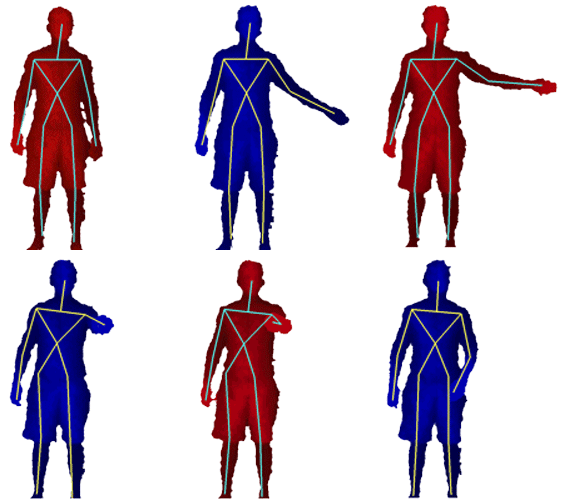
- [66]L. Miranda, T. Vieira, D. Martinez, T. Lewiner, A. W. Vieira, M. F. M. Campos. Real-time gesture recognition from depth data through key poses learning and decision forests. Sibgrapi 2012.
- [67]T. Vieira, A. Bordignon, A. Peixoto, G. Tavares, H. Lopes, L. Velho, T. Lewiner. Learning good views through intelligent galleries. Eurographics 2009.
- [68]A. W. Vieira, T. Lewiner, W. Schwartz, M. F. M. Campos. Distance matrices as invariant features for classifying MoCap data. ICPR 2012.
- [69]R. Faugeroux, T. Vieira, D. Martinez, T. Lewiner. Simplified training for gesture recognition. Sibgrapi 2014.
- [70]L. Miranda, T. Vieira, D. Martinez, T. Lewiner, A. W. Vieira, M. F. M. Campos. Online gesture recognition from pose kernel learning and decision forests. Pattern Recognit. Lett. 39, 2014.
- [71]A. Bordignon, R. Castro, H. Lopes, T. Lewiner, G. Tavares. Exploratory visualization based on multidimensional transfer functions and star coordinates. Sibgrapi 2006.
- [72]T. Lewiner, R. Torres (eds.). The Visual Computer - Special Issue on SIBGRAPI 2011. Vis. Comput. 28(10), 2012.
- [73]T. Lewiner, R. Torres (eds.). Proceedings 24th Sibgrapi Conference on Graphics, Patterns and Images. IEEE, 2011.
Slower than email deserves, but I answer. I'd like to hear from R&D leaders who suspect their discovery pipeline should be moving faster, academic groups looking for an industrial partner with real scientific standards, and founders applying AI to scientific and industrial problems. Also, always, about doctoral programmes or anything geometric. Write to email; the longer record lives on LinkedIn, Google Scholar, GitHub and Lattes.