Thomas Lewiner
Partner & Vice President, Boston Consulting Group
Diretor científico, BCG X AI Science Institute
email · Google Scholar · LinkedIn
Resumo
Dois doutorados, Professor, quinze anos pesquisador em matemática, depois uma década colocando IA para funcionar na indústria. Hoje sou o diretor científico do BCG X AI Science Institute, transformando ciência em avanços industriais. Em tardes de chuva, alguns pequenos aplicativos feitos com meus filhos.
Palavras-chave: geometria computacional · topologia · IA para a ciência e a indústria
1 Histórico
Sou um executivo com duplo doutorado com cerca de vinte e cinco anos de experiência divididos entre P&D avançado e colocar soluções no mundo real. Sou o diretor científico do BCG X AI Science Institute, o hub global da BCG para pesquisa em IA aplicada — transformando ciência em avanços industriais, em torno de uma pergunta exigente e precisa: quais problemas científicos a IA realmente acelera, e o que é preciso para industrializar a resposta.
Antes disso, passei sete anos dentro de uma organização de P&D industrial na Ceva Santé Animale — primeiro como Chief Data Officer, depois como Chief Data Science & Bioinformatics Officer — direcionando o grupo para a TechBio e conduzindo o design de vacinas por IA, da pesquisa até a validação regulatória. É ali que se aprende o que, da promessa, sobrevive ao contato com o laboratório.
Antes disso, ajudei a expandir o BCG Gamma (hoje BCG X) desde os seus primeiros dias, e por quinze anos fui pesquisador e professor de matemática na PUC-Rio, atuando em geometria computacional e topologia, teoria de Morse discreta, processamento de geometria, modelagem de reservatórios e dinâmica de fluidos computacional. Fui eleito membro afiliado da Academia Brasileira de Ciências.
Em paralelo à Ceva, passei cinco anos como Operating Partner na Quadrille Capital (2021–2026), onde avaliava empresas de IA e deeptech pelo mérito técnico, e integrei o conselho consultivo da Vegetal Signals (2020–2026), deeptech de Bordeaux que lê a eletrofisiologia das plantas para dizer ao produtor do que a lavoura precisa. Deixei os dois em setembro de 2026 para ingressar na BCG.

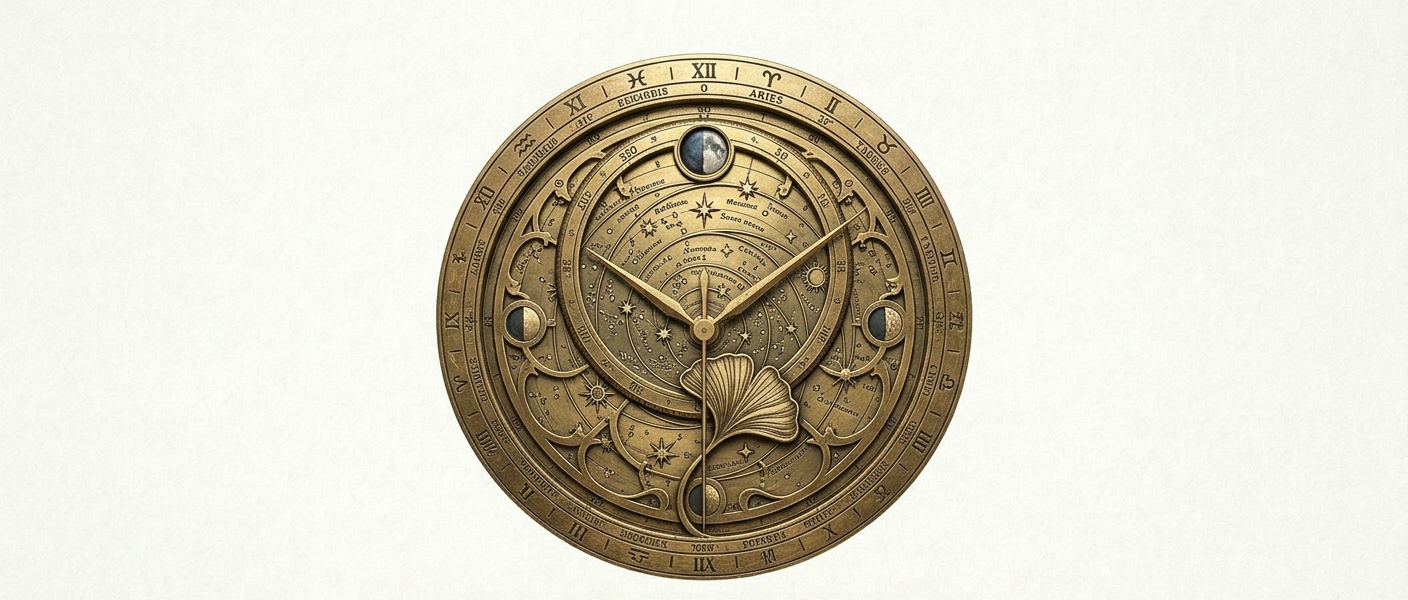
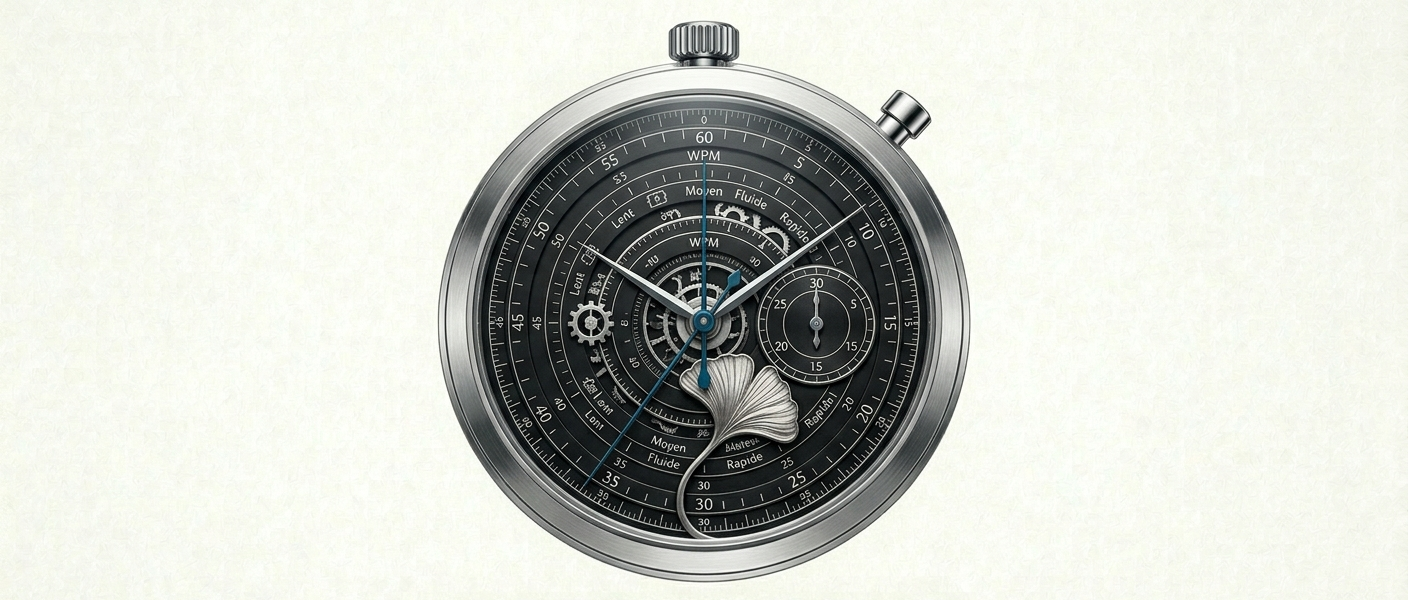
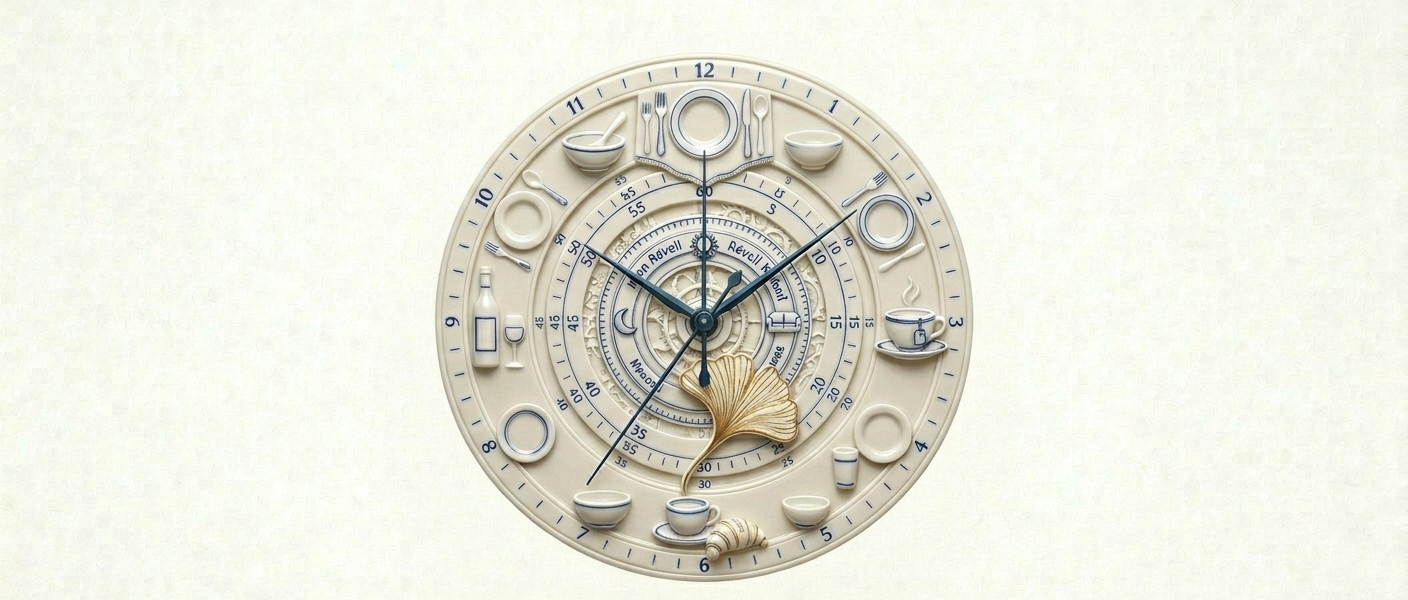
Tabela 1: Cargos, títulos e honrarias. 80+ publicações, 3300+ citações, h-index 28+, 20+ alunos orientados. A versão longa está no LinkedIn.
| Indústria | |
|---|---|
| 2026–now | Partner & Vice President · Diretor científico, BCG X AI Science Institute, Boston Consulting Group · BCG X |
| 2022–2026 | Chief Data Science & Bioinformatics Officer, Ceva Santé Animale |
| 2019–2022 | Chief Data Officer, Ceva Santé Animale |
| 2016–2019 | Lead Data Scientist, Boston Consulting Group · BCG Gamma |
| Conselhos & assessoria | |
| 2021–2026 | Operating Partner, Quadrille Capital · growth equity de tecnologia & saúde |
| 2020–2026 | Conselho consultivo · machine learning, Vegetal Signals · eletrofisiologia vegetal para agricultura |
2 Pesquisa
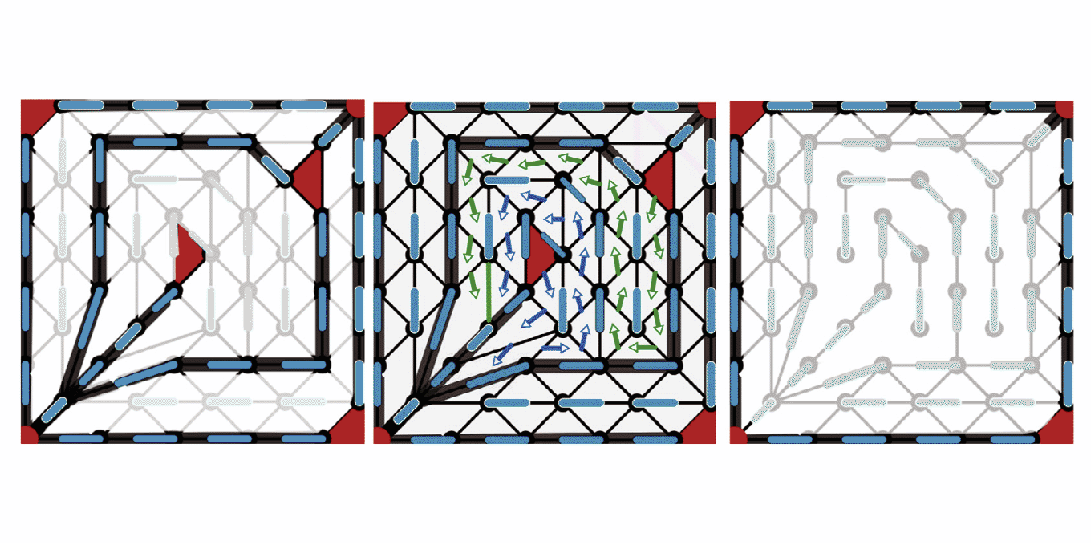
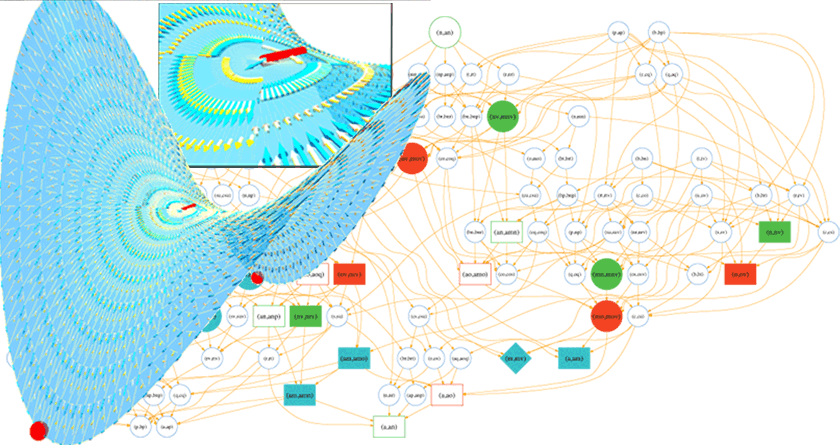
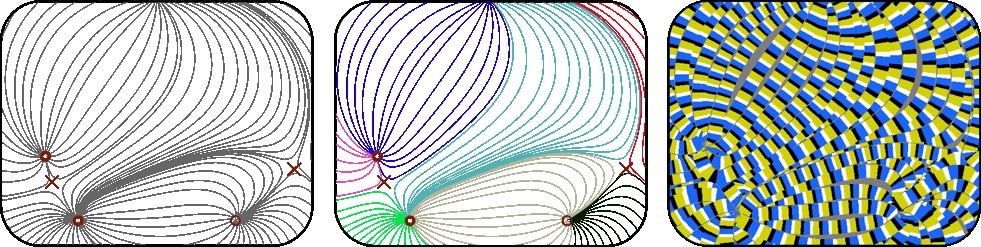
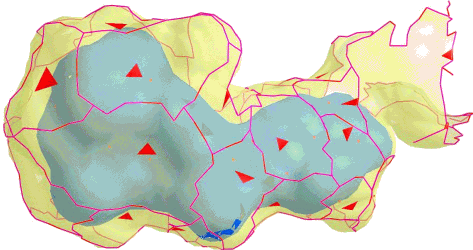
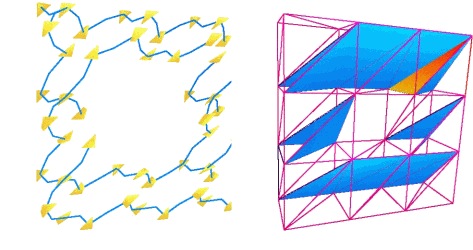
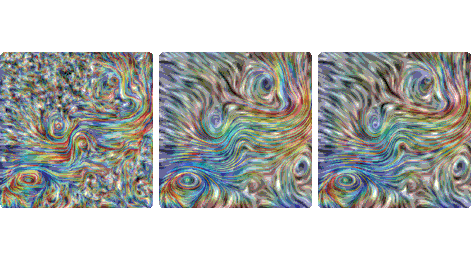
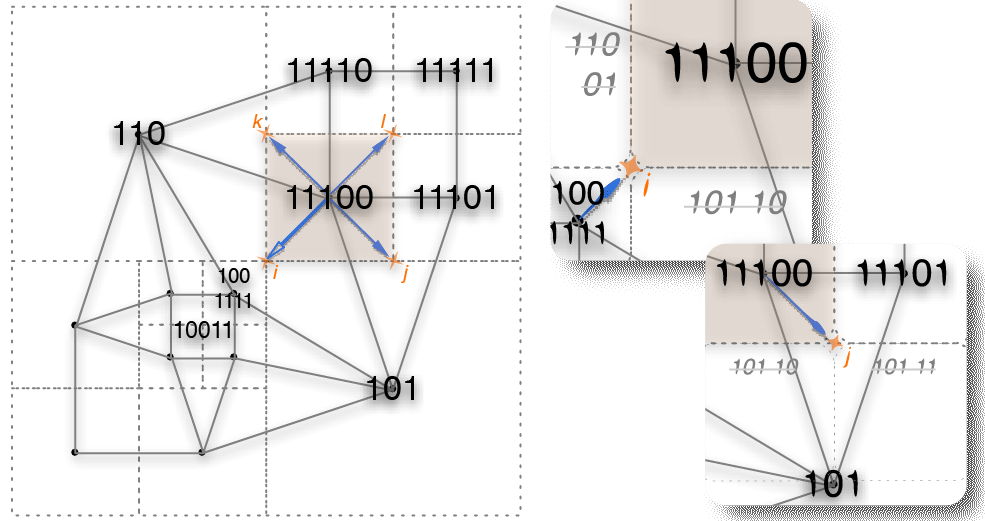
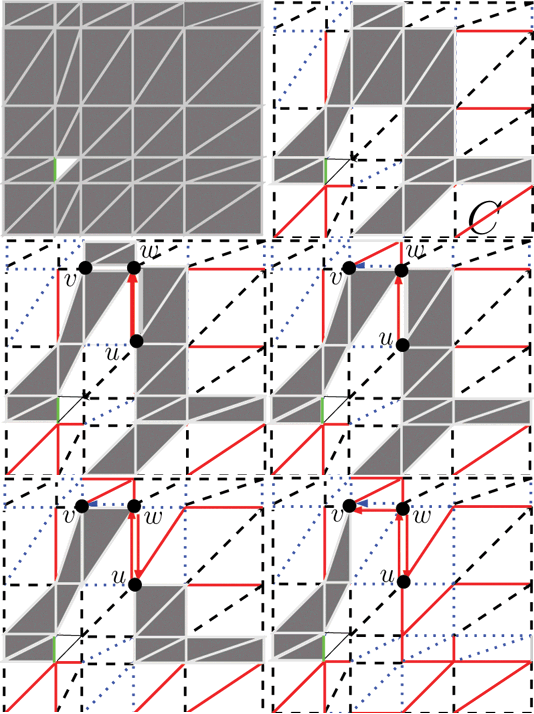
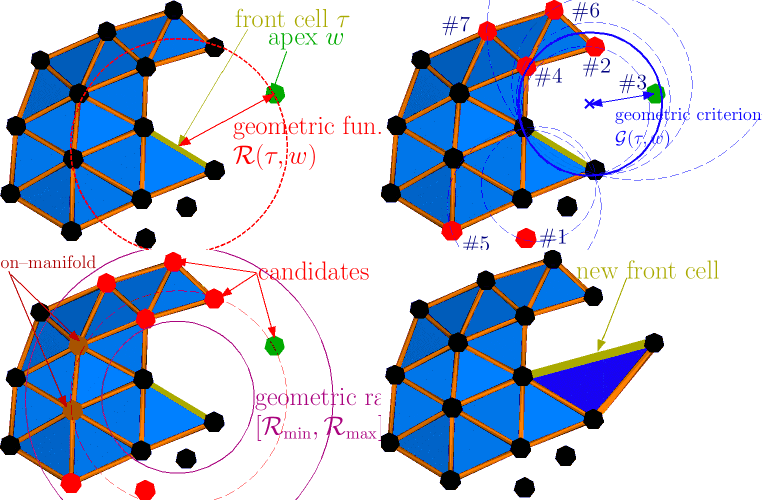
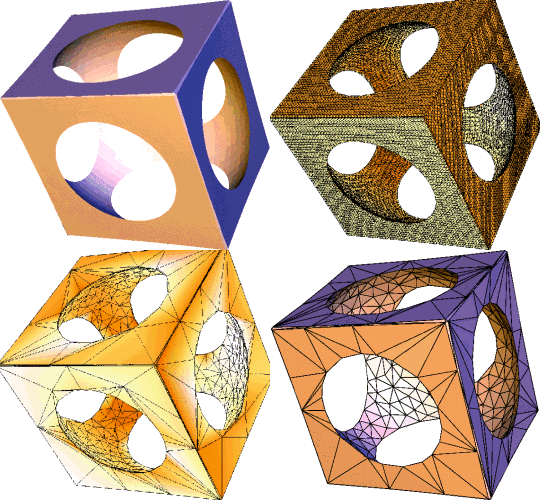
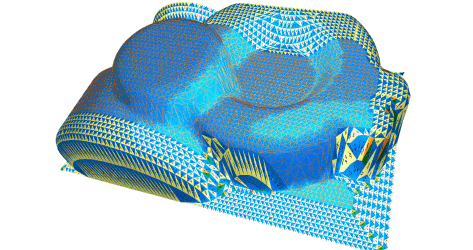
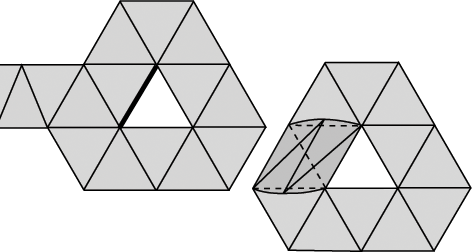
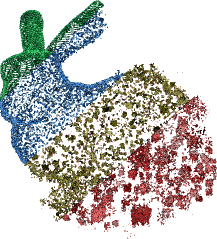
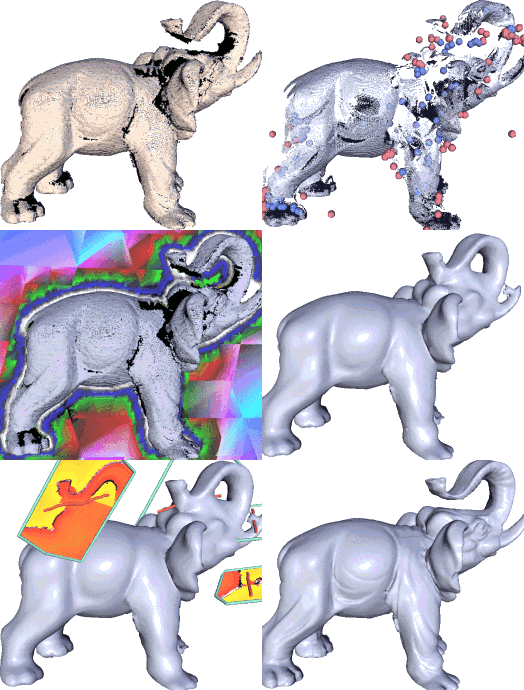
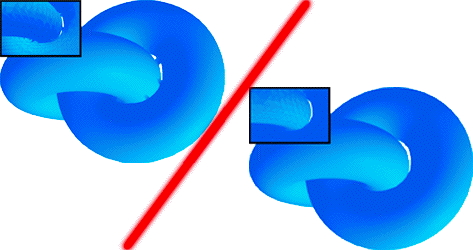
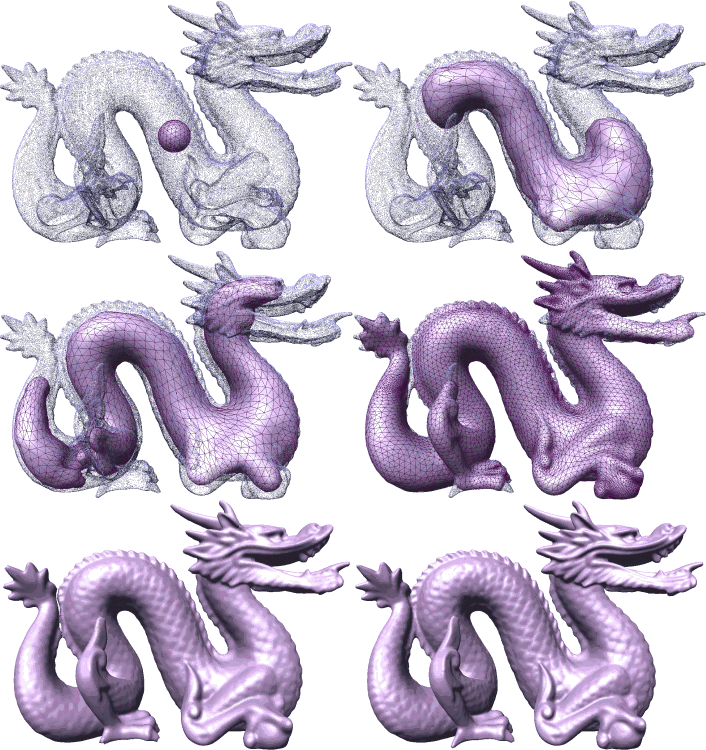
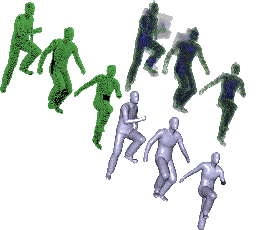
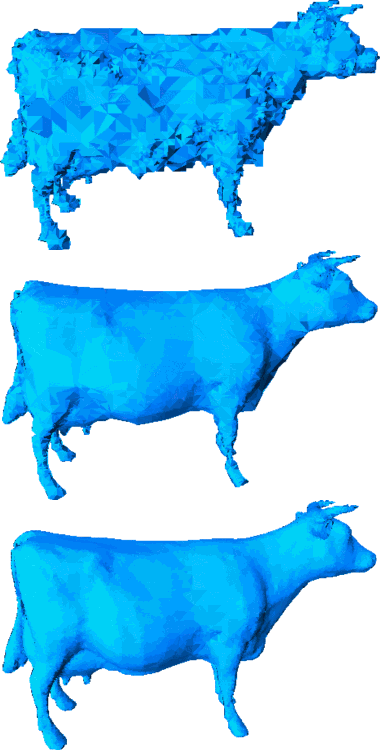
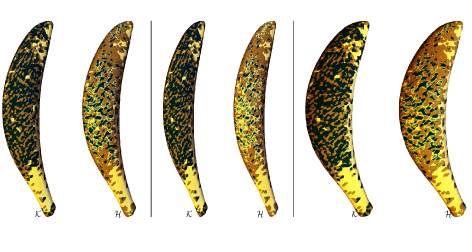
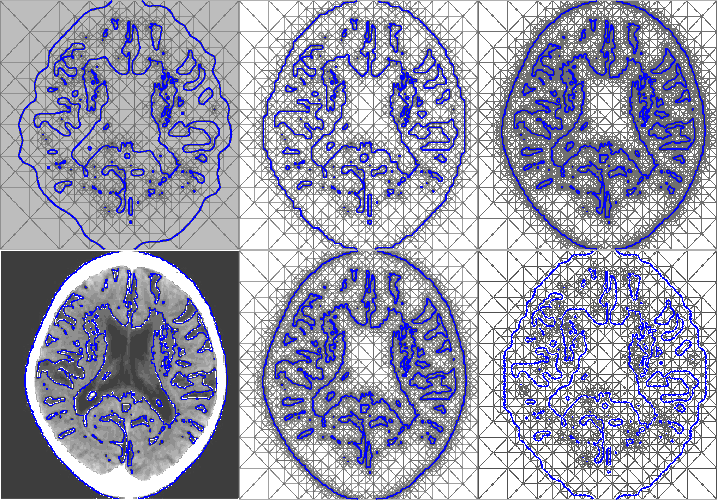
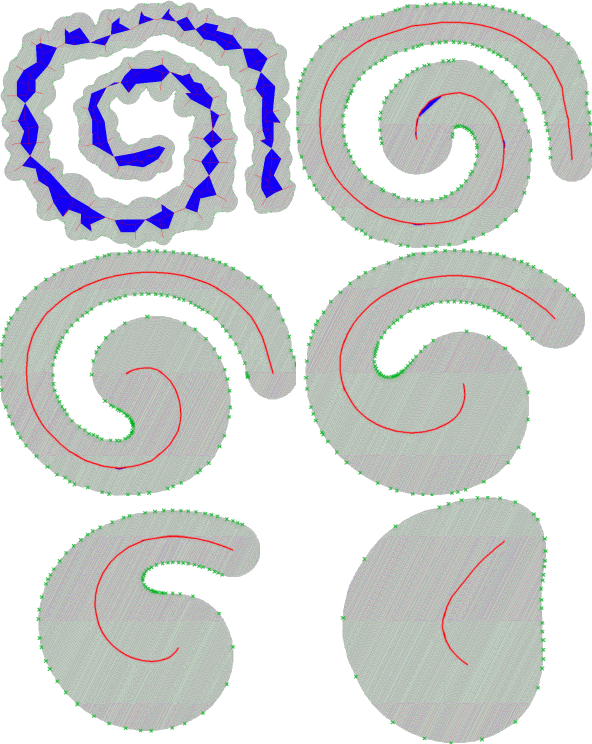
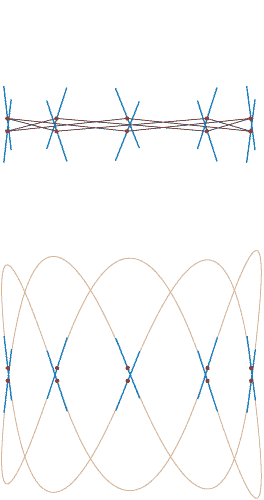
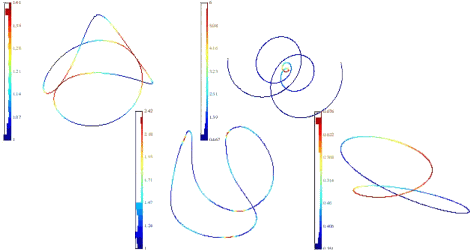
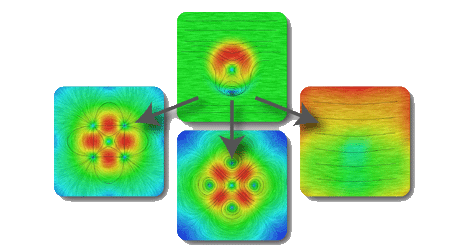
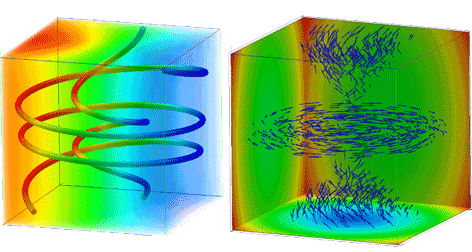
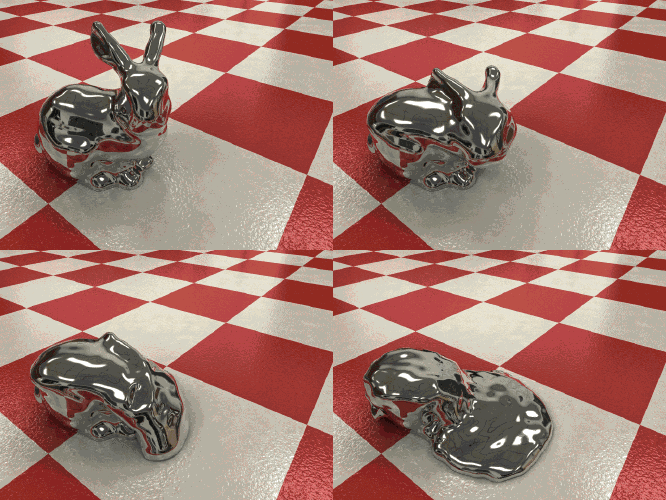
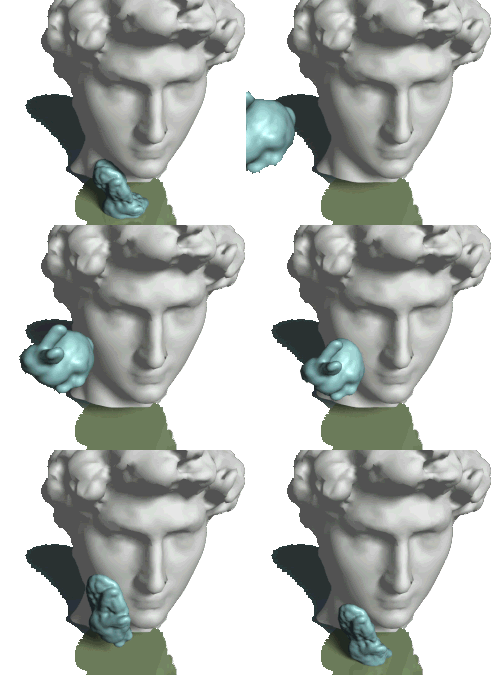
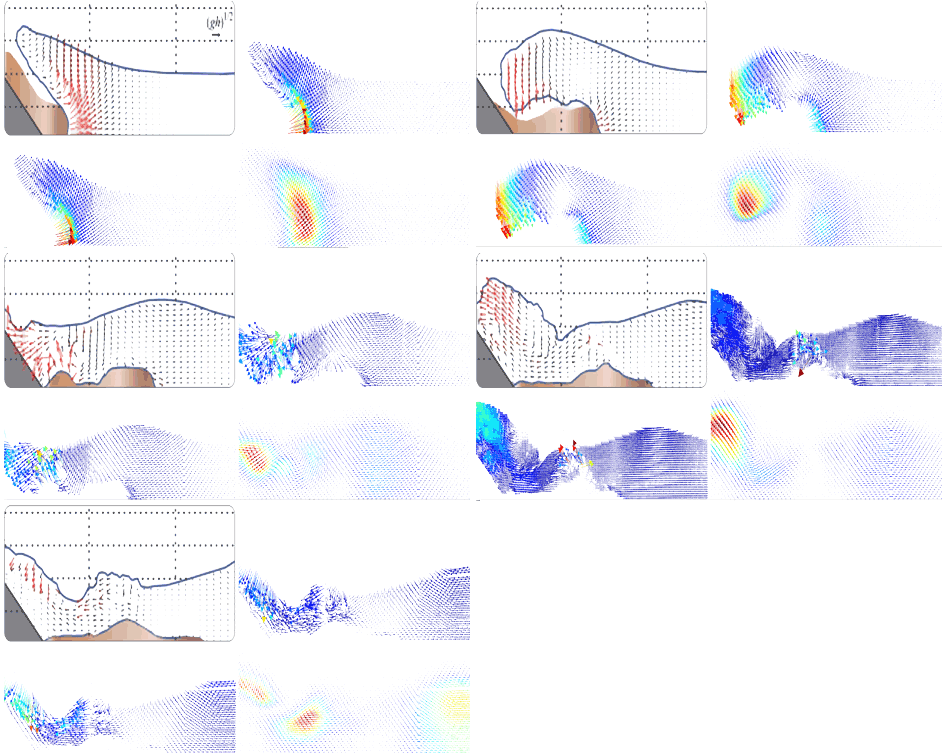
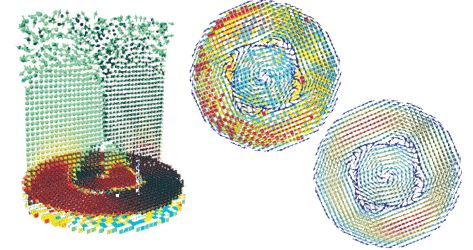
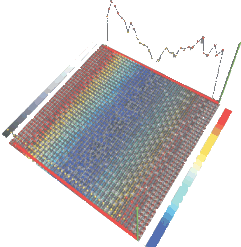
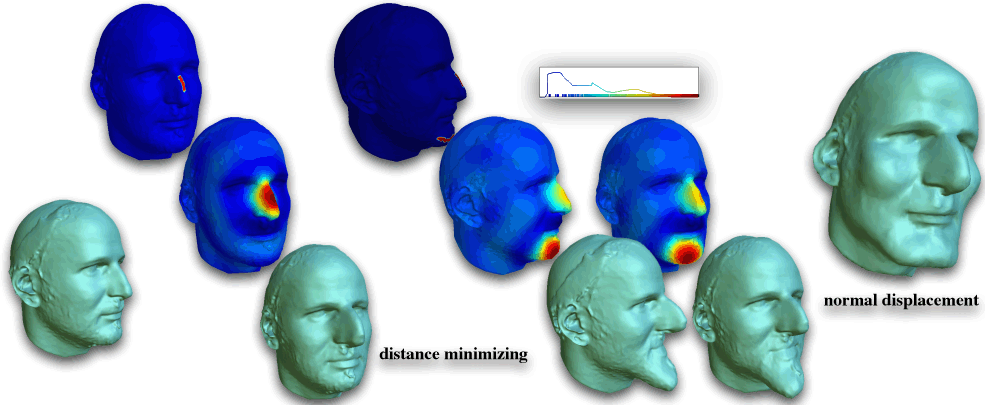
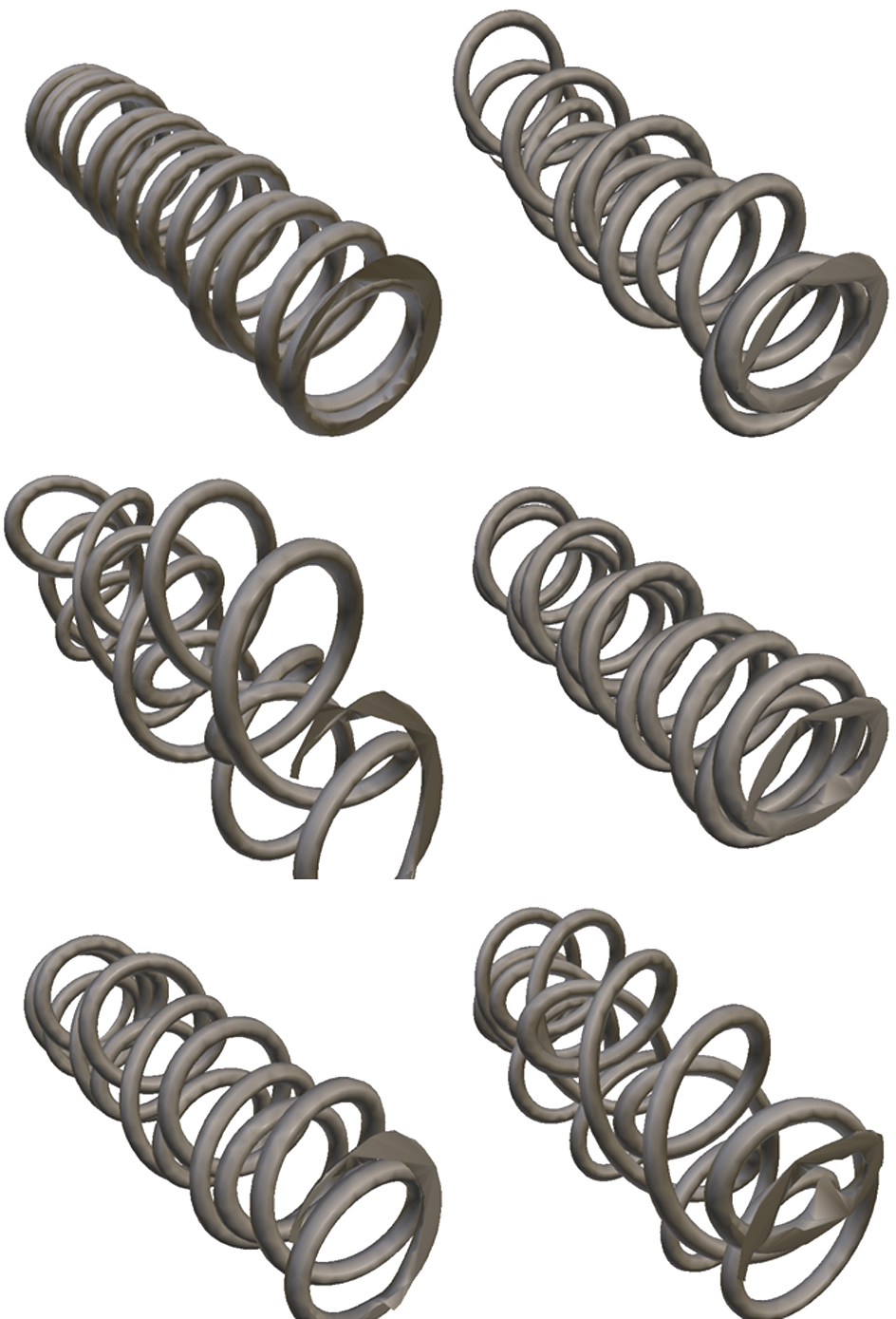
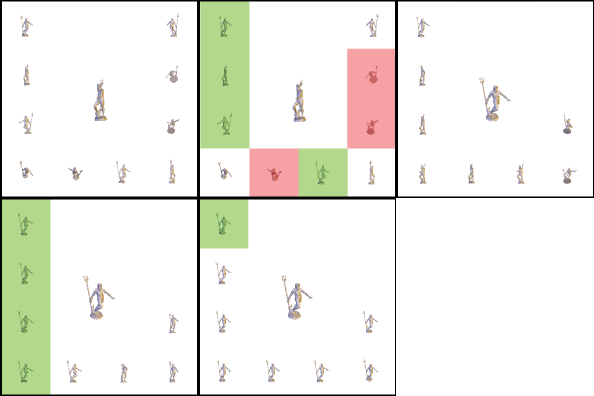
Quinze anos de pesquisa acadêmica: 73 artigos de 2002 a 2021, reunidos por tema nas Figuras 2 a 7 e listados na íntegra nas referências. Cada painel e cada título abre o artigo; o registro completo está no Google Scholar.
3 Projetos
3.1 Os aplicativos ·sophe
Uma pequena suíte de aplicativos sobre o tempo e a medida, criada com meus filhos. Começaram como ferramentas para o dever de casa e continuaram crescendo. Cada um está disponível para macOS, iOS e watchOS (Figura 1).
| Academia | |
|---|---|
| 2006–2016 | Associate Professor & Researcher, PUC-Rio · Mathematics |
| 2018–2024 | Lecturer · DSBA Master, CentraleSupélec / ESSEC |
| 2007–2015 | Visiting Professor, École Polytechnique · U. of Queensland · Tel-Aviv U. · FU-Berlin |
| Títulos Acadêmicos | |
| 2003–2005 | Ph.D. in Mathematics, PUC-Rio, Geometric Discrete Morse Complexes |
| 2002–2005 | Ph.D. in Computer Science, INRIA / Université Paris VI, Mesh Compression from Geometry |
| 2000–2002 | M.Sc. · Mathematics, Telecom ParisTech & PUC-Rio |
| 1997–2000 | Mestrado em Engenharia, Ciência e Tecnologia, École Polytechnique · Programa Ingénieur Polytechnicien, ciência da computação & física |
| Prêmios e Honrarias | |
| 2012–2016 | Membro afiliado, Academia Brasileira de Ciências |
| 2011 | Palestrante convidado, TopoInVis 2011, ETH Zürich |
| 2011–2013 | Coordenador de programa, ACM SoCG 2013 · Sibgrapi 2011 |
| – | Editor, Computer Graphics Forum · Image Processing On Line · Anais da ABC |
3.2 Código antigo
- Marching Cubes 33 (2003). Biblioteca C++ de referência garantindo consistência topológica exata para isossuperfícies sem fendas geométricas. [source.zip · paper]
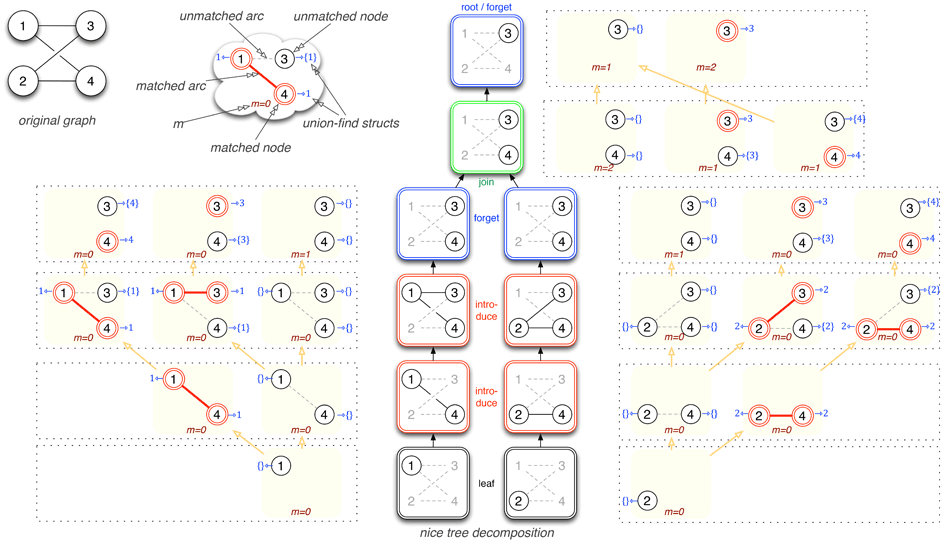
- Topological Mesh Operators (2010). Conjunto discreto de operadores combinatórios para mutação de estruturas de variedades trianguladas de dimensão 2. [source.zip · paper]
- Pointerless Octree Duals (2010). Algoritmo eficiente em memória que otimiza limites de geração rápida em árvores dinâmicas profundas. [source.zip · paper]
- Arc-Length Based Curvature Estimation (2006). Programa de demonstração (Windows) para o artigo, com exemplos. [demo.zip · paper]
3.3 Tutoriais
- Topology of discrete manifolds (and non-manifolds) through cell complexes, mini-course at the IMPA trimester on Computational Manifolds and Applications.
- Geometric invariant calculus and estimation: an introduction to Euclidean and affine geometries, with M. Andrade. 28th Brazilian Mathematics Colloquium, IMPA (08/2011).
- Implicit curves and surfaces: elements of differential and discrete geometries, with M. Andrade, A. Cabral, V. Mello and A. Peixoto. 1st Mathematics Colloquium of the North East (03/2011).
- Meshless fluid simulation: an introduction to SPH methods, with A. Paiva, F. Petronetto and G. Tavares. 27th Brazilian Mathematics Colloquium, IMPA (08/2009).
- Introduction to Computer Graphics, with V. Mello. Summer School, Federal University of Alagoas (01–02/2009).
- Implicit Surfaces and Isosurfaces: from Calculus to Medical, Game and Oil Industries, with A. Peixoto. IV National Symposium / Scientific Initiation Days, IMPA (11/2008).
- 3D Compression: from A to Zip, Tutorial at Sibgrapi 2007 (10/2007).
- 3D Objects Compression, One-week course at Matfest 2006, Federal University of Alagoas (06/2006).
4 Orientandos
Doutorado
- Tiago N. de Brito, discrete differential geometry (PUC-Rio · 2014).
- João A. R. da Paixão, discrete Morse matchings: complexity & stable matching (PUC-Rio · 2014).
- Jyrko C. Morris, foliating Marching Cubes' cases in 3D & 4D (IMPA · 2013).
- Maria A. Costa, affine structures & isosurfaces (PUC-Rio · 2011).
- Renata T. L. do Nascimento, quad meshes (PUC-Rio · 2011).
- Roger Véron, affine estimators & applications (PUC-Rio · 2011).
- Thales M. A. Vieira, smart galleries & camera placement (PUC-Rio · 2010).
- Allyson N. T. Cabral, tetraquads (PUC-Rio · 2010).
- Rener P. de Castro, statistical optimization of hierarchical searches (PUC-Rio · 2008).
- Clarissa C. S. C. Marques, real-time 3D animation, harmonic & modal (PUC-Rio · 2007).
Mestrado
- Thiago E. Gomes, modeling & visualization of TriQuad (UFRJ · 2014).
- Guilherme N. Seguro, model reduction for flow simulation (UFRJ · 2014).
- Romulo Brito, invariant derivative filters (PUC-Rio · 2013).
- Rafael L. A. Martinez, Kalman filters (PUC-Rio · 2013).
- Karine R. Pereira, computational geometry for petroleum engineering (PUC-Rio · 2013).
- Renata T. L. do Nascimento, topology-based self-animated vector fields (PUC-Rio · 2011).
- Lis I. R. L. Custódio, barycentric coordinates for mesh deformation (PUC-Rio · 2010).
- João A. R. da Paixão, feature-preserving vector field denoising (PUC-Rio · 2010).
- Betina Vath, union of balls, medial axis & 3D deformation (PUC-Rio · 2007).
- David Rey, distributions & immersions (PUC-Rio · 2007).
- Catiuscia A. Borges, connectivity-based geometry reconstruction (PUC-Rio · 2007).
Iniciação científica e projetos de fim de curso
Eric Cardona Romani '07 · Daniel Fleischman '07 · Matheus F. F. Maciel '07 · Carlos Simonsen Leal '07 · Bernardo Ribeiro '07 · Raffael Capano de Arruda '08 · Mariana Milazzo '08 · Lucas von Haeling Braune '09 · Victor Hugo M. Ferreira '09 · Cairo P. C. Caplan '09 · Rafael L. A. Martinez '06 · Erick C. S. Talarico '06 · Bianca de C. Lodoli '12–13 · Rafael Farias Cação '12–13 · Victor Hugo de O. da Silva '13 · Yukio Shiota Junior '13 · José Eliton Albuquerque Filho '12 · Leandro dos Reis Lopes '12 · Arthur de Paula Kolblinger '14 · Alexandre Maxinsang '14 · Maximiliano Faria '14 · Romain Faugeroux '14 · Anna-Lívia de Souza Ribeiro '14.
Referências
- [1]B. A. Burton, T. Lewiner, J. Paixão, J. Spreer. Parameterized Complexity of Discrete Morse Theory. ACM TOMS 42(1), 2016.
- [2]T. Novello, J. Paixão, C. Tomei, T. Lewiner. Discrete line fields on surfaces. Topol. Appl. 290(1), 2021.
- [3]T. Lewiner. Critical sets in discrete Morse theories: relating Forman and piecewise-linear approaches. CAGD 30(6), 2013.
- [4]R. Nascimento, T. Lewiner. Streamline-based topological graph construction with application to self-animated images. Sibgrapi 2013.
- [5]F. Cazals, F. Chazal, T. Lewiner. Molecular shape analysis based upon Morse-Smale complex and the connolly function. SoCG 2003.
- [6]T. Lewiner, H. Lopes, G. Tavares. Applications of Forman’s discrete Morse theory to topology visualization and mesh compression. IEEE TVCG 10(5), 2004.
- [7]R. Nascimento, J. Paixão, H. Lopes, T. Lewiner. Topology aware vector field denoising. Sibgrapi 2010.
- [8]T. Lewiner, H. Lopes, G. Tavares. Optimal discrete Morse functions for 2-manifolds. Comput. Geom. 26(3), 2003.
- [9]B. A. Burton, T. Lewiner, J. Paixão, J. Spreer. Parameterized Complexity of Discrete Morse Theory. SoCG 2013.
- [10]T. Lewiner, H. Lopes, G. Tavares. Towards optimality in discrete Morse theory. Exp. Math. 12(3), 2003.
- [11]T. Lewiner. Geometric discrete Morse complexes. PhD thesis, PUC-Rio, 2005.
- [12]T. Lewiner. Constructing discrete Morse functions. MSc thesis, PUC-Rio, 2002.
- [13]T. Lewiner, H. Lopes, G. Tavares. Visualizing Forman’s discrete vector field. Vis. Math. III, Springer, 2002.
- [14]G. Tavares, R. Santos, H. Lopes, T. Lewiner, A. W. Vieira. Topological reconstruction of oil reservoirs from seismic surfaces. IAMG 2003.
- [15]T. Lewiner, V. Mello, A. Peixoto, S. Pesco, H. Lopes. Fast generation of pointerless octree duals. SGP 2010.
- [16]L. Castelli Aleardi, E. Fusy, T. Lewiner. Schnyder woods for higher genus triangulated surfaces, with applications to encoding. Discrete Comput. Geom. 42(3), 2009.
- [17]T. Lewiner, M. Craizer, H. Lopes, S. Pesco, L. Velho, E. Medeiros. GEncode: geometry-driven compression for general meshes. Comput. Graph. Forum 25(4), 2006.
- [18]A. W. Vieira, T. Lewiner, L. Velho, H. Lopes, G. Tavares. Stellar mesh simplification using probabilistic optimization. Comput. Graph. Forum 23(4), 2004.
- [19]T. Lewiner, H. Lopes, J. Rossignac, A. W. Vieira. Efficient EdgeBreaker for surfaces of arbitrary topology. Sibgrapi 2004.
- [20]T. Lewiner, H. Lopes, E. Medeiros, G. Tavares, L. Velho. Topological mesh operators. CAGD 27(1), 2010.
- [21]A. Bordignon, T. Lewiner, H. Lopes, G. Tavares, R. Castro. Point set compression through BSP quantization. Sibgrapi 2006.
- [22]A. W. Vieira, L. Velho, H. Lopes, G. Tavares, T. Lewiner. Fast stellar mesh simplification. Sibgrapi 2003.
- [23]R. Castro, T. Lewiner, H. Lopes, G. Tavares, A. Bordignon. Statistical optimization of octree searches. Comput. Graph. Forum 27(6), 2008.
- [24]M. Lage, A. Bordignon, F. Petronetto, Á. Veiga, G. Tavares, T. Lewiner, H. Lopes. Approximations by smooth transitions in binary space partitions. Sibgrapi 2008.
- [25]M. Lage, T. Lewiner, H. Lopes, L. Velho. CHF: a scalable topological data structure for tetrahedral meshes. Sibgrapi 2005.
- [26]T. Lewiner, M. Craizer, H. Lopes, S. Pesco, L. Velho, E. Medeiros. GEncode: geometry-driven compression in arbitrary dimension and co-dimension. Sibgrapi 2005.
- [27]T. Lewiner. Mesh compression from geometry. PhD thesis, INRIA / Univ. Paris VI, 2005.
- [28]L. Castelli Aleardi, E. Fusy, T. Lewiner. Schnyder woods for higher genus triangulated surfaces. SoCG 2008.
- [29]A. Sharf, T. Lewiner, G. Shklarski, S. Toledo, D. Cohen-Or. Interactive topology-aware surface reconstruction. Siggraph 2007.
- [30]T. Lewiner, H. Lopes, A. W. Vieira, G. Tavares. Efficient implementation of marching cubes cases with topological guarantees. J. Graph. Tools 8(2), 2003.
- [31]A. Sharf, T. Lewiner, A. Shamir, L. Kobbelt, D. Cohen-Or. Competing fronts for coarse-to-fine surface reconstruction. Eurographics 2006.
- [32]A. Sharf, D. Alcantara, T. Lewiner, C. Greif, A. Sheffer, N. Amenta, D. Cohen-Or. Space-time surface reconstruction using incompressible flow. Siggraph Asia 2008.
- [33]T. Lewiner, L. Velho, H. Lopes, V. Mello. Simplicial isosurface compression. VMV 2004.
- [34]M. Andrade, T. Lewiner. Affine-invariant curvature estimators for implicit surfaces. CAGD 29(2), 2012.
- [35]T. Lewiner, L. Velho, H. Lopes, V. Mello. Extraction and compression of hierarchical isocontours from image data. Comput. Med. Imaging Graph. 30(4), 2006.
- [36]T. Vieira, A. Peixoto, L. Velho, T. Lewiner. An iterative framework for registration with reconstruction. VMV 2007.
- [37]M. Andrade, A. Cabral, V. Mello, A. Peixoto, T. Lewiner. Implicit curves and surfaces: elements of differential and discrete geometries. SBM, 2011.
- [38]A. Paiva, H. Lopes, T. Lewiner, L. H. de Figueiredo. Robust adaptive meshes for implicit surfaces. Sibgrapi 2006.
- [39]T. Lewiner, L. Velho, H. Lopes, V. Mello. Hierarchical isocontours extraction and compression. Sibgrapi 2004.
- [40]T. Pereira, R. Paes Leme, L. Velho, T. Lewiner. Symmetry-based completion. GRAPP 2009.
- [41]T. Vieira, D. Martinez, M. Andrade, T. Lewiner. Estimating affine-invariant structures on triangle meshes. Sibgrapi 2016.
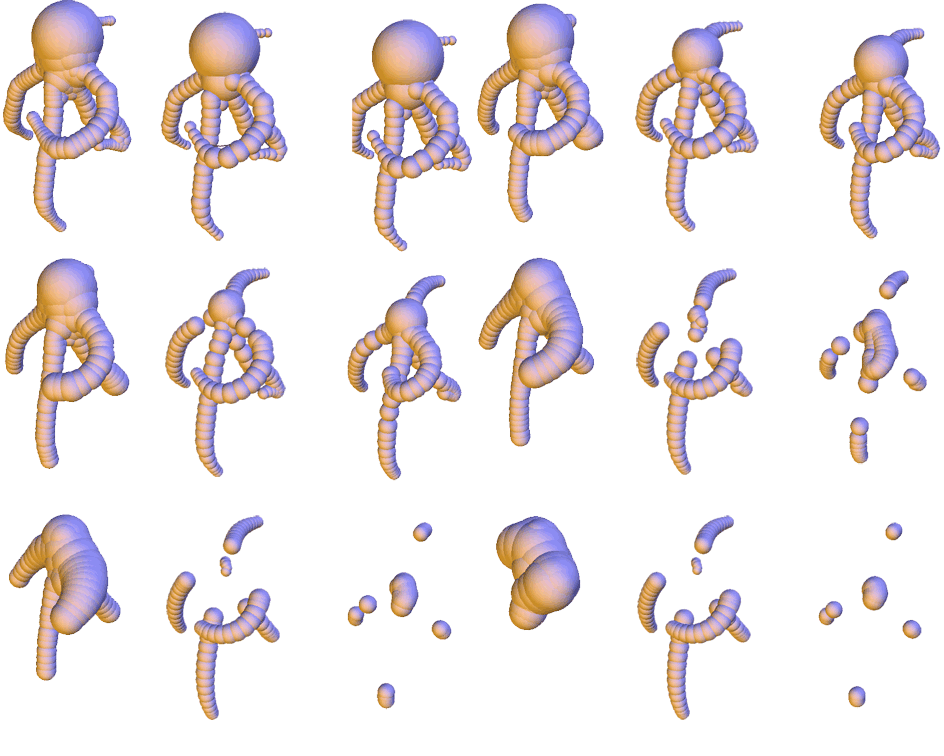
- [42]A. Bordignon, B. Vath, T. Vieira, C. Ferreira, M. Craizer, T. Lewiner. Scale-space for union of 3d balls. Sibgrapi 2009.
- [43]M. Andrade, T. Lewiner. Geometric invariant calculus and estimation: an introduction to Euclidean and affine geometries. IMPA, 2011.
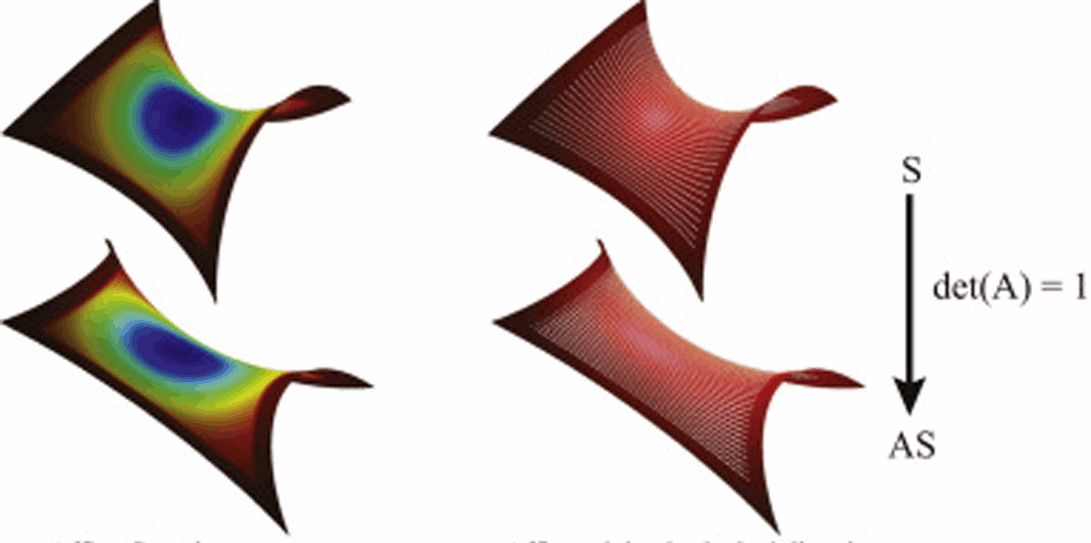
- [44]M. Craizer, H. Anciaux, T. Lewiner. Discrete affine minimal surfaces with indefinite metric. Differ. Geom. Appl. 28(2), 2010.
- [45]T. Lewiner, C. Ferreira, M. Craizer, R. Teixeira. Curvature motion for union of balls. Sibgrapi 2005.
- [46]M. Craizer, T. Lewiner, J.-M. Morvan. Combining points and tangents into parabolic polygons: an affine invariant model for plane curves. J. Math. Imaging Vis. 29(2-3), 2007.
- [47]T. Lewiner, J. Gomes, H. Lopes, M. Craizer. Curvature and torsion estimators based on parametric curve fitting. Comput. Graph. 29(5), 2005.
- [48]T. Lewiner, M. Craizer. Projective splines and estimators for planar curves. J. Math. Imaging Vis. 36(1), 2010.
- [49]T. Lewiner, M. Craizer. Projective estimators for point-tangent representations of planar curves. Sibgrapi 2008.
- [50]M. Craizer, T. Lewiner, J.-M. Morvan. Parabolic polygons and discrete affine geometry. Sibgrapi 2006.
- [51]T. Lewiner, J. Gomes, H. Lopes, M. Craizer. Arc-length based curvature estimator. Sibgrapi 2004.
- [52]F. Petronetto, A. Paiva, M. Lage, G. Tavares, H. Lopes, T. Lewiner. Meshless Helmholtz-Hodge decomposition. IEEE TVCG 16(2), 2010.
- [53]M. Lage, R. Castro, F. Petronetto, A. Bordignon, G. Tavares, T. Lewiner, H. Lopes. Support vectors learning for vector field reconstruction. Sibgrapi 2009.
- [54]A. Paiva, F. Petronetto, T. Lewiner, G. Tavares. Particle-based non-Newtonian fluid animation for melting objects. Sibgrapi 2006.
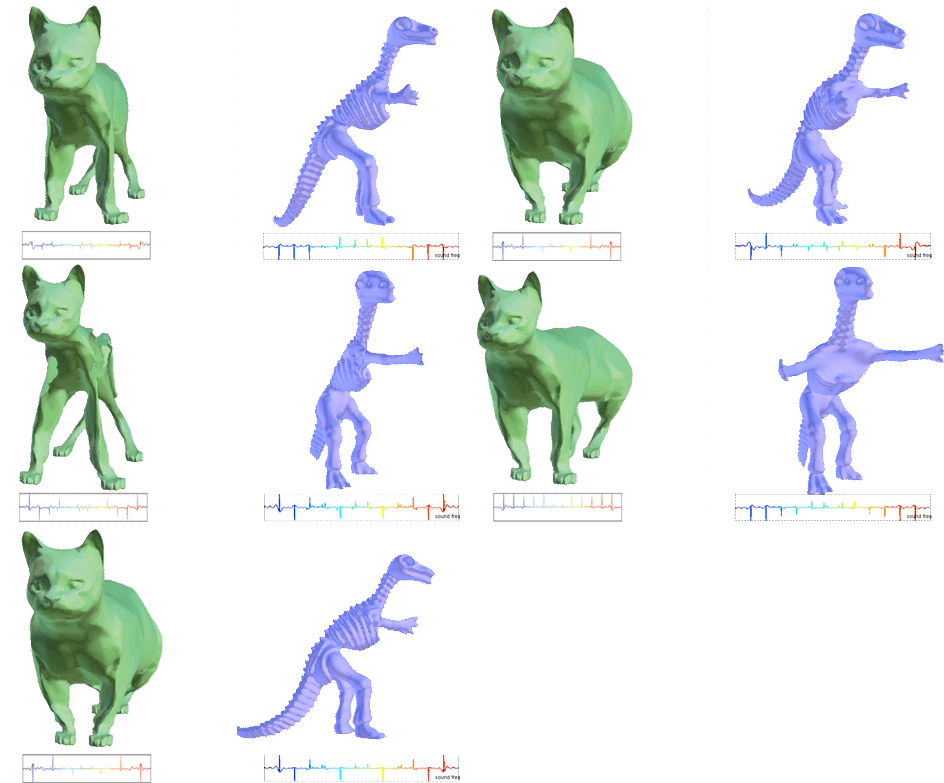
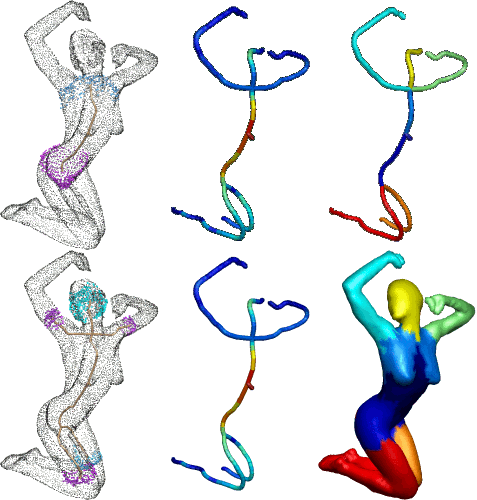
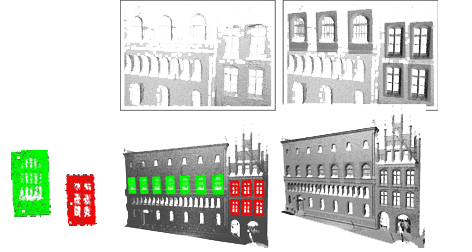
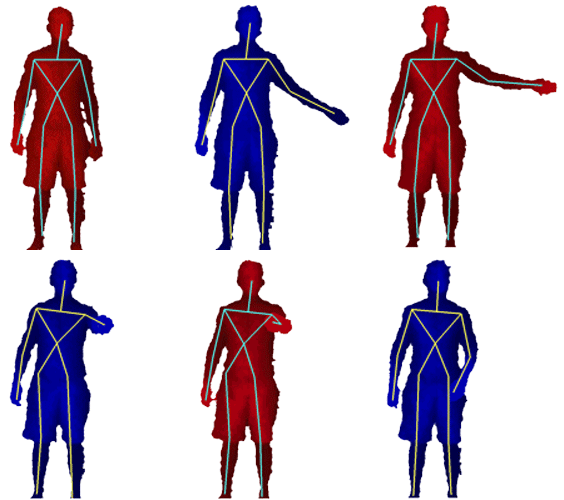
- [55]A. Paiva, F. Petronetto, T. Lewiner, G. Tavares. Particle-based viscoplastic fluid/solid simulation. Comput.-Aided Des. 41(4), 2009.
- [56]J. Paixão, M. Lage, F. Petronetto, A. Bordignon, S. Pesco, G. Tavares, T. Lewiner, H. Lopes. Random walks for vector field denoising. Sibgrapi 2009.
- [57]L. Sigaud, A. Bordignon, H. Lopes, T. Lewiner, G. Tavares, W. Morgado. Role of arches in the generation of shear bands in a dense 3D granular system under shear. J. Phys. Conf. Ser. 246(1), 2010.
- [58]A. Bordignon, L. Sigaud, G. Tavares, H. Lopes, T. Lewiner, W. Morgado. Arch generated shear bands in granular systems. Physica A 388(11), 2009.
- [59]M. Lage, F. Petronetto, A. Paiva, H. Lopes, T. Lewiner, G. Tavares. Vector field reconstruction from sparse samples with applications. Sibgrapi 2006.
- [60]A. Paiva, F. Petronetto, T. Lewiner, G. Tavares. Meshless fluid simulation: introduction to SPH methods. IMPA, 2009.
- [61]T. Lewiner, T. Vieira, D. Martinez, A. Peixoto, V. Mello, L. Velho. Interactive 3D caricature from harmonic exaggeration. SMI 2011.
- [62]T. Lewiner, C. Marques, J. Paixão, S. de Botton, A. Cabral, R. Nascimento, V. Mello, A. Peixoto, D. Martinez, T. Vieira. Stereo music visualization through manifold harmonics. Vis. Comput. 27(10), 2011.
- [63]T. Lewiner, T. Vieira, A. Bordignon, A. Cabral, C. Marques, J. Paixão, L. Custódio, M. Lage, M. Andrade, R. Nascimento, S. de Botton, S. Pesco, H. Lopes, V. Mello, A. Peixoto, D. Martinez. Tuning manifold harmonics filters. Sibgrapi 2010.
- [64]A. Sharf, T. Lewiner, A. Shamir, L. Kobbelt. On-the-fly curve-skeleton computation for 3d shapes. Eurographics 2007.
- [65]T. Vieira, A. Bordignon, T. Lewiner, L. Velho. Geometry super-resolution by example. Sibgrapi 2009.
- [66]L. Miranda, T. Vieira, D. Martinez, T. Lewiner, A. W. Vieira, M. F. M. Campos. Real-time gesture recognition from depth data through key poses learning and decision forests. Sibgrapi 2012.
- [67]T. Vieira, A. Bordignon, A. Peixoto, G. Tavares, H. Lopes, L. Velho, T. Lewiner. Learning good views through intelligent galleries. Eurographics 2009.
- [68]A. W. Vieira, T. Lewiner, W. Schwartz, M. F. M. Campos. Distance matrices as invariant features for classifying MoCap data. ICPR 2012.
- [69]R. Faugeroux, T. Vieira, D. Martinez, T. Lewiner. Simplified training for gesture recognition. Sibgrapi 2014.
- [70]L. Miranda, T. Vieira, D. Martinez, T. Lewiner, A. W. Vieira, M. F. M. Campos. Online gesture recognition from pose kernel learning and decision forests. Pattern Recognit. Lett. 39, 2014.
- [71]A. Bordignon, R. Castro, H. Lopes, T. Lewiner, G. Tavares. Exploratory visualization based on multidimensional transfer functions and star coordinates. Sibgrapi 2006.
- [72]T. Lewiner, R. Torres (eds.). The Visual Computer - Special Issue on SIBGRAPI 2011. Vis. Comput. 28(10), 2012.
- [73]T. Lewiner, R. Torres (eds.). Proceedings 24th Sibgrapi Conference on Graphics, Patterns and Images. IEEE, 2011.
Mais lento do que os e-mails merecem, mas eu respondo. Gostaria de conversar com líderes de P&D que desconfiam que seu pipeline de descoberta deveria andar mais rápido, com grupos acadêmicos à procura de um parceiro industrial de padrão científico real, e com fundadores que aplicam IA a problemas científicos e industriais. E sempre, com prazer, sobre programas de doutorado ou qualquer tema geométrico. Escreva para email; o histórico completo está em LinkedIn, Google Scholar, GitHub e Lattes.